

High-Calorie Soup: Recipes & How to Add More Calories
In diesem Leitfaden

High calorie soups carry 500 to 800 calories a bowl, against about 200 for a typical tin, because they are built on a rich base such as cream, whole milk, coconut milk, cheese, lentils or potato, with fat stirred in. A 400g tin of cream of tomato is about 205 calories; with 30g double cream, 30g cheddar and a tablespoon of olive oil it becomes 605.
The sum for that bowl: 205 + 150 + 125 + 125 = 605 calories, from about 75g of extra food. All soup figures on this page come from McCance and Widdowson's Composition of Foods (CoFID 2021), the UK government's food composition data: each ingredient's per-100g value multiplied by its weight in the recipe, rounded to the nearest 5.
This guide is for people who need to eat more, not less, whether that is for weight gain, recovery, hard training or an appetite that has dropped off. It sits alongside the wider how to gain weight guide, and for a soft, cold counterpart there is high calorie ice cream.
Is soup high in calories?
Most soup is not high in calories: a typical 400g tin or carton comes to about 150 to 235, because soup is mostly water. That is exactly why soup is a weight-loss staple, and why an ordinary bowl fills your stomach without doing much when eating enough is already a struggle.
Turning soup from low calorie to high calorie comes down to two decisions: the base you build it on, and what you add to it. Get those right and soup becomes one of the easiest calorie-dense foods to eat, warm and soft, especially when appetite is low.
Which soups have the most calories?
Homemade lentil soup has the most calories of the common UK soups in McCance and Widdowson, at 121 per 100g, and even that is only about 485 in a 400g bowl. Here are 11 UK soups ranked by calories per 100g, with a 400g bowl alongside:
- Lentil, homemade: 121 per 100g, about 485 a bowl.
- Goulash, homemade: 106, about 425.
- Mulligatawny, homemade: 90, about 360.
- Pea and ham, homemade: 73, about 290.
- Minestrone, homemade: 60, about 240.
- Cream of chicken, canned: 58, about 230.
- Potato and leek, homemade: 56, about 225.
- Cream of tomato, canned: 51, about 205.
- Broccoli and stilton, chilled carton: 51, about 205.
- Minestrone, canned: 31, about 125.
- Chicken noodle from a dried packet, made up: 19, about 75.
Thick, starchy and creamy soups sit at the top; clear and packet soups sit at the bottom. The recipes further down reach 590 to 655 a bowl before any bread, which is why the add-ins change the total more than the soup you start with.
Free download
Free guide: how to eat 500+ calories in under 2 minutes
A short PDF of the simplest ways people get more calories from less food. Free, sent straight to your inbox.
Free. Unsubscribe anytime. Privacy policy
How do you choose a high calorie soup base?
The base makes the biggest difference, because it sets the calorie floor before you add anything. A thin stock keeps a soup light whatever goes in: ready-made chicken stock is about 12 calories per 100g, against 63 for whole milk, 169 for full-fat tinned coconut milk and 496 for double cream.
The highest-calorie bases are cream, whole milk, tinned full-fat coconut milk (the reduced-fat tin is less than half, at 79 per 100g) and cheese or roux-based (butter and flour) soups. Starchy bases built on potato, lentils, beans, pasta or bread come next, because they thicken the soup and add calories of their own. Blended soups also tend to carry more calories per spoonful than clear ones, and they are easier to eat; the guide to high calorie pureed foods applies the same idea well beyond soup. Plain vegetable, consommé and clear broth are lovely but light.
For shop-bought soup the same pattern holds: reach for the creamy, chowder, bisque or cheese-and-potato styles rather than the clear or "light" ranges, and check the per-portion calorie figure on the label, since it varies widely. Then treat the tin as a starting point.
How do you add calories to soup?
Stir fat and protein into your own bowl just before eating; most add-ins take seconds and barely change how much there is to eat. Approximate calories for each, from McCance and Widdowson:
- Double cream, 30g: about 150 calories.
- Full-fat crème fraîche, 30g: about 115.
- Grated cheddar, 30g: about 125.
- Olive oil, a 14g tablespoon: about 125.
- Butter, 10g: about 75.
- Smooth peanut butter, 16g: about 95, and it melts into tomato or satay-style soups.
- Skimmed milk powder, 15g: about 50 calories and 5g of protein, with no change in volume.
- Tinned full-fat coconut milk, 100g: about 170.
- Cooked pasta, 100g: about 170.
On top: 30g of croutons fried in oil add about 150, 25g of crispy grilled bacon about 70, and 15g of pumpkin seeds about 85. A 40g slice of bread with 10g of butter on the side adds 165. The dietitians at St George's Hospital suggest the same stir-ins in their recipes-for-weight-gain leaflet, including double cream, grated cheese, crème fraîche, olive oil, peanut butter, cream cheese, pesto, milk powder and butter.
One common mistake: adding cream to a whole pan and then dividing it. 60g of double cream across four bowls is only 75 calories each. Put the extras into your own bowl instead. Toppings also do a second job, because colour, crunch and smell make a bowl more appetising, and that helps when appetite is the limit.
High calorie soup recipes
Two batch soups and two single bowls, each weighed and added up.
Sweet potato, red lentil and coconut soup: about 590 calories a bowl
Serves 4. Ingredients: 150g onion (50), 10g garlic (10), 20g fresh ginger (10), 28g rapeseed oil, about two tablespoons (250), 500g peeled sweet potato (435), 150g dried red lentils (465), a 400g tin of full-fat coconut milk (675), 600ml chicken or vegetable stock (70), 60g double cream (300) and 30g skimmed milk powder (105). That is 2,370 calories in the pan, about 590 and 19g of protein a bowl.
Gently fry the onion, garlic and ginger in the oil for five minutes. Add the sweet potato, lentils, coconut milk and stock and simmer for 30 minutes until everything is soft. Stir in the cream and the milk powder (dissolve it in a ladle of the warm soup first so it does not clump), then blend until completely smooth and season. Top each bowl with 15g pumpkin seeds and a 5g drizzle of oil (130 more) and serve with a slice of buttered bread (165) to reach about 885.
Cheesy leek and potato soup: about 605 calories a bowl
Serves 4. Ingredients: 40g butter (300), 300g leeks (70), 150g onion (50), 600g potatoes (490), 500ml whole milk (325), 500ml stock (60), 150g grated cheddar (625) and 100g double cream (495). That is 2,415 calories in the pan, about 605 and 21g of protein a bowl.
Soften the leeks and onion in the butter for ten minutes without browning. Add the diced potatoes, milk and stock and simmer gently for 20 to 25 minutes until the potatoes break up. Take it off the heat, stir in the cheese and cream, and blend smooth or leave it chunky. Milk-based soups catch easily, so keep the heat low.
The fortified tin: about 655 calories
One bowl. A 400g tin of cream of tomato (205), 30g double cream (150), 30g grated cheddar (125), a 14g tablespoon of olive oil (125) and 15g skimmed milk powder (50). Warm the soup, whisk in the milk powder, then stir in the rest off the heat. It takes the tin from about 4g of protein to about 17g, and from 205 calories to 655.
For full meals that go further, the 1,000 calorie meals page has 15 plates with the sums shown, and the high calorie lunch guide pairs soup with a buttered roll for a packable midday meal.
How do you make a high calorie broth?
A clear broth will never be calorie-dense on its own, because the stock carries almost nothing, so the calories have to go in as noodles, meat, egg and oil. One loaded chicken noodle bowl: 400ml chicken stock (50), 150g cooked egg noodles (250), 100g roast chicken (175), one 55g boiled egg (80), 10g sesame oil (90) and 50g spinach (10). That is 655 calories and about 54g of protein, the most protein of any soup on this page.
Is soup good for weight gain and bulking?
Soup is good for weight gain only when each bowl is built to be dense: 500 calories or more, with some protein. A 205 calorie tin of tomato soup on its own will not move the scales, while the leek and potato or lentil and coconut soups above, with bread, come to about 755 to 885 a sitting. For bulking, where protein matters as much as calories, the loaded broth (about 54g of protein) and the fortified tin (about 17g) are the better picks. Soup is still one meal in a day, so the plan around it matters more: see bulking meals and the weight gain meal plan.
Soup for older adults and small appetites
Warm, soft, blended soup is one of the more forgiving foods when appetite has dropped off, because it asks very little of the person eating it. Serve a smaller bowl made on a cream or coconut base rather than a large bowl of something thin, so the amount looks manageable. Stir cream, oil, cheese or milk powder through so the bowl barely changes. Offer it in a mug to sip if a spoon feels like effort, and let warmth and smell do some of the work, since a savoury soup often appeals when cold or heavy food does not.
Keeping a few portions in the freezer means there is something easy ready on the days cooking feels like too much. For more ideas, see high calorie foods for older adults, meals for elderly people and soft high calorie foods. If you, or someone you care for, is losing weight without trying, or eating has suddenly changed, talk to a GP.
Where Phoenix Bars fit
A savoury soup and a Phoenix Bar solve the same problem, soft and easy calories when a full meal is too much, but a bar needs no pot or cooking. Each bar has up to 557 calories in a compact, lightweight 120g bar, and stirred into water or milk it becomes a high calorie porridge in a couple of minutes, a sweet counterpart to a savoury bowl. The bars are vegan and gluten-free. Our page on high calorie bars lists all six flavours.
Frequently asked questions
What is the best high calorie soup for a low appetite? A smooth, blended soup on a cream or coconut base, served in a small but rich bowl or sipped from a mug. The sweet potato, lentil and coconut soup above is a good one to batch, because it is soft, mild and freezes in single portions for days when cooking is too much.
Can I make high calorie soup vegan or gluten-free? Yes. For the lentil and coconut soup, use vegetable stock and swap the double cream and milk powder for extra coconut milk or coconut cream. For gluten-free soups, thicken with lentils, beans or potato rather than a flour roux and check that your stock cube is labelled gluten-free. More ideas are in vegan high-calorie foods and high-calorie gluten-free foods.
Does soup make you gain weight? Only if your daily total ends up above what you burn. Ordinary soup is too light to make much difference, at 150 to 235 calories a tin, but a fortified bowl of 600 or more with buttered bread can be a real part of eating more each day.
Which soup has the most protein? Of the soups on this page, the loaded chicken noodle broth, at about 54g a bowl. Among standard recipes in McCance and Widdowson, homemade goulash (7.7g per 100g, about 31g a 400g bowl) and homemade lentil soup (5.9g, about 24g) are the highest.
Sources: McCance and Widdowson's Composition of Foods Integrated Dataset 2021 (Public Health England); St George's Hospital, Recipes for weight gain.
Written by James Frost, founder of Flaming Phoenix. Updated October 2026: soups ranked by calories, four recipes weighed and added up from McCance and Widdowson values, and new sections on broth, weight gain and older adults.
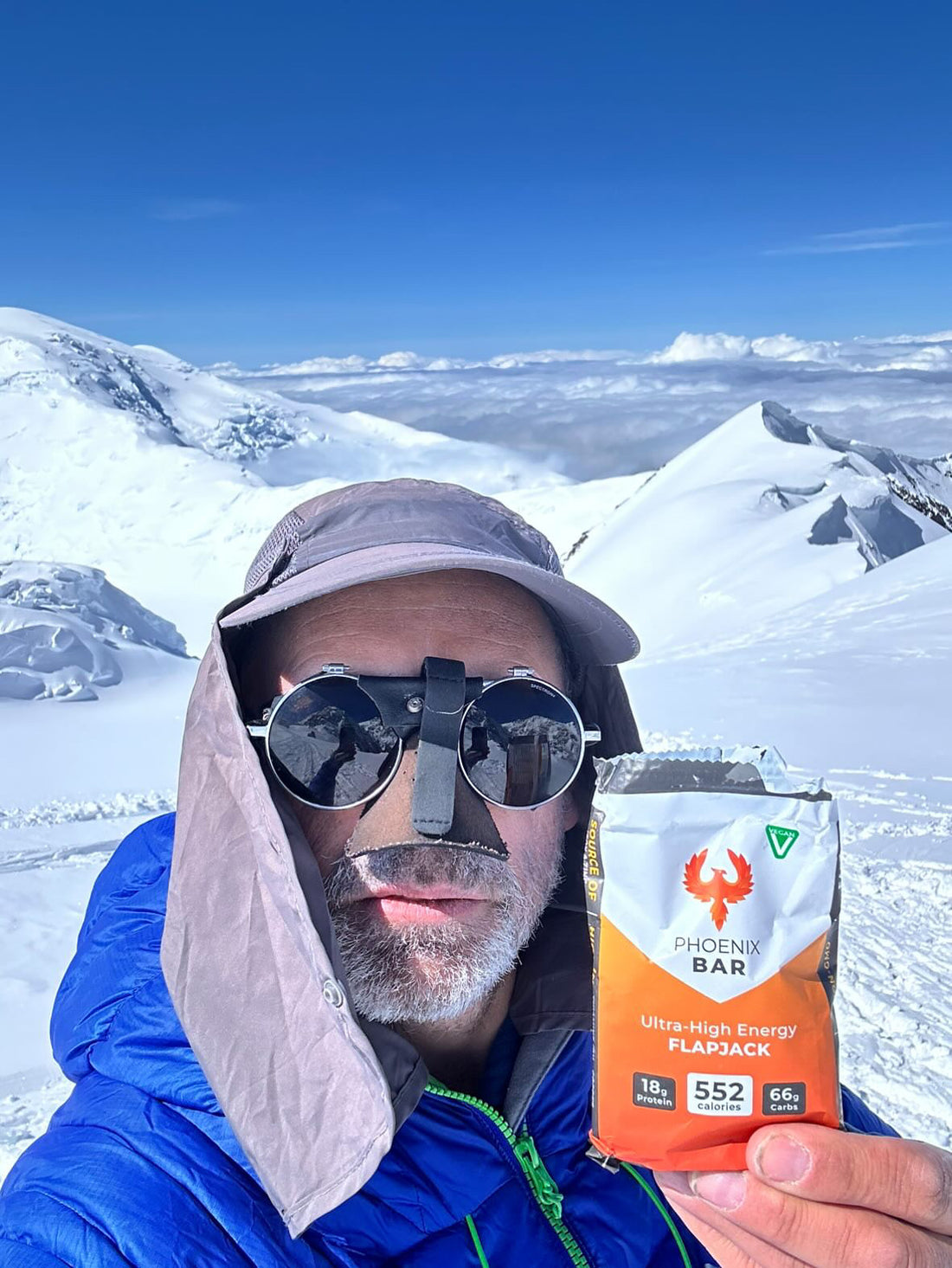
Viele Kalorien. Kleiner Riegel.
Bis zu 557 Kalorien in einem kompakten, leichten Riegel von nur 120 g, mit bis zu 66 g Kohlenhydraten und 19 g Protein. Im Ganzen essen, über ein paar Stunden in Stücken essen oder mit Wasser oder Milch zu Porridge verrühren.
Leicht zu essen, leicht verdaulich und nicht zu süß. Kunden haben sie bei -45 °C und in der Hitze des Marathon des Sables gegessen, und sie sind bis zu zwei Jahre haltbar: für die Berge, die Nachtschicht oder zu Hause, an Tagen, an denen genug zu essen schwerfällt.
- 557 Kalorien in nur 120 g (529 bis 557 je nach Sorte)
- 4,6 Kalorien pro Gramm
- 66g Kohlenhydrate pro Riegel (bis zu)
- 19g Protein pro Riegel (bis zu)
Widerruf erklären
Füllen Sie das folgende Formular aus, um Ihre Widerrufserklärung abzugeben.

