
High Calorie Dinner Ideas: How to Add Calories Without a Bigger Plate
Quick answer: A high calorie dinner is an evening meal built from calorie-dense ingredients, so it delivers more calories from a sensible portion. The easiest way to make one is to build the calories in while you cook: use a generous cooking fat, make the sauce a creamy or oily one, and finish the plate with cheese, nuts or a drizzle of oil. Done this way, a normal-sized dinner reaches 700 to 1,000 calories without becoming a mountain of food. For the underlying principle, see calorie-dense foods.
Dinner is the meal where this is easiest, because you are cooking it. Breakfast and lunch are often assembled from whatever is to hand, but dinner is built from scratch on the hob or in the oven, and every stage of cooking is a chance to add calories that never show up as extra bulk on the plate.
Why is dinner the easiest meal to add calories to?
Because the calories go in during cooking, not at the table. The thing I learned from customers who eat the biggest dinners is that almost none of it comes from a bigger portion. It comes from the oil, butter, cream and cheese that go in while it cooks, none of which you can see on the finished plate.
A curry made with water and the same curry made with a tin of full-fat coconut milk look identical in the bowl, but there can be 300 to 400 calories between them. That is the whole game with dinner: change how it is cooked, not how much is served.
How do you make a dinner higher in calories?
There are three points in cooking a meal where you can add a lot without changing the size of the plate: the fat you cook in, the sauce, and the finish.
Cook in more fat
Fry in oil or butter rather than a splash of water. Softening onions in a tablespoon of olive oil adds about 120 calories before anything else goes in. A knob of butter (around 15g) stirred through mash, rice or vegetables adds roughly 110 calories. Roasting potatoes or vegetables in two tablespoons of oil adds about 240. None of it adds volume, all of it adds calories.
Make the sauce carry the calories
Sauces are the biggest single lever at dinner. Swapping a tomato-based sauce for a creamy one, stirring two tablespoons of double cream (about 135 calories) into a pasta sauce, or using 100ml of full-fat coconut milk (about 180 calories) in a curry, lifts the entire dish in one move. A spoon of peanut butter melted into a stir-fry sauce adds about 95.
Finish the plate
The last step is where you top up. Around 30g of grated cheddar melted over the top adds about 125 calories, a tablespoon of pesto about 90, a 30g handful of toasted cashews stirred through about 180, and a final drizzle of olive oil about 120. Small additions, but they land on top of everything already built in.
What are some easy high calorie dinners?
These are low-effort, mostly one-pot dinners for when you do not want to spend an hour cooking. Each shows the components and an approximate total. Adjust portions to suit your appetite.
- Creamy coconut chickpea curry with rice: chickpeas simmered in a tin of full-fat coconut milk with a tablespoon of oil, served over rice. Around 850 calories, and it reheats well.
- Cheesy pasta bake: a 75g dry portion of pasta in a tomato sauce made with a tablespoon of oil, topped with 40g of cheese and baked. Around 700 calories.
- Peanut noodle stir-fry: noodles with a sauce of two tablespoons of peanut butter and a tablespoon of oil, finished with a handful of cashews. Around 750 calories.
- Roasted sausage and potato traybake: sausages and potatoes roasted in two tablespoons of oil with whatever vegetables you have. Around 800 calories, one tray, no washing up.
- Lentil and bean stew with bread: a hearty stew built on a good glug of olive oil, with a crusty roll and real butter on the side. Around 700 calories.
- A loaded rice bowl: rice with black beans, half an avocado, 30g of cheese and an olive oil dressing. Around 750 calories, no cooking beyond the rice.
If you want the midday version of this, see high calorie lunch ideas. For most of these, the calories sit in the oil, cream and cheese rather than the size of the bowl, which is exactly the point.

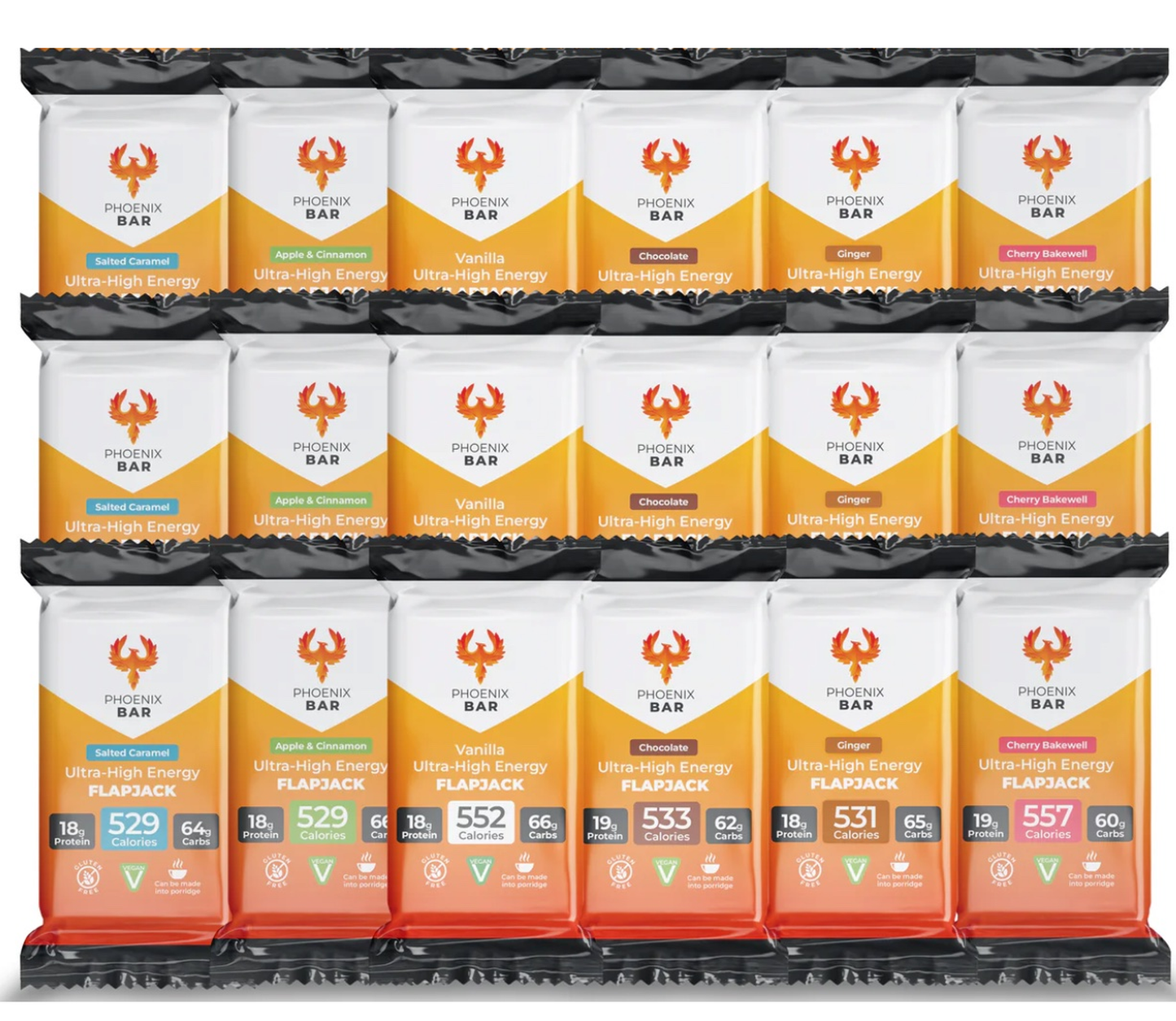
Phoenix Bars: Up to 557 Calories Per Bar
Highly compact, low-volume, calorie-dense bars. Soft, easy to eat whole or as a warm porridge. Vegan, gluten-free and contain up to 66g of carbohydrates, 19g of protein & 8 vitamins & minerals.
What can you eat for dinner when you are not hungry in the evening?
Appetite often dips in the evening, especially after a long or busy day. If you are not hungry at dinner, the answer is the same as at any meal: make the calories smaller in volume rather than forcing down a big plate.
A few things that work. Serve a smaller portion of the densest part of the meal and skip the bulky sides. Have a bowl of a creamy soup, or a shake, instead of a full plate on the evenings a proper dinner feels like too much. And keep a compact, no-cook option to hand for the days you cannot face cooking at all. For more on this, see what to eat when you fill up after a few bites, and high calorie drinks and smoothies for liquid options.
On the evenings cooking is out of the question, a single bar is one thing some people keep in the cupboard. Each of our high calorie bars packs up to 557 calories into a 120g bar, it is vegan and gluten-free, and the same bar can be stirred into hot water or milk to make porridge if you would rather eat it warm. The idea behind our high calorie bars is maximum calories in the smallest, easiest format, which is what an evening with no appetite calls for.
Does a big dinner at night sit heavily?
It can for some people, and it depends more on timing and what the meal is made of than the calorie figure itself. A very large meal right before bed can feel uncomfortable and make it harder to settle.
If dinner is your main chance to add calories but evenings are when you eat least, eating a little earlier tends to help, or splitting dinner into a smaller plate plus something lighter later on. A compact, fat-led dinner usually sits more easily than a large low-density one, simply because there is less food to get through.
Frequently asked questions
What is a good high calorie dinner?
A good high calorie dinner is built on a calorie-dense base, a generous cooking fat and a rich sauce, landing around 700 to 1,000 calories. Examples include a coconut chickpea curry, a cheesy pasta bake, or a peanut noodle stir-fry. The aim is more calories from a normal-sized plate.
How can I add calories to dinner without eating more?
Add fat during cooking. Fry in oil or butter, make the sauce creamy or oily, and finish with cheese, nuts or a drizzle of oil. A tablespoon of olive oil, two tablespoons of cream, or a tin of coconut milk each adds 120 to 360 calories with no extra bulk on the plate.
What are easy high calorie dinners?
One-pot and traybake meals are easiest: a coconut curry, a pasta bake, a sausage and potato traybake, or a loaded rice bowl. They need little effort, reheat well, and let the oil, cream and cheese do the work rather than a larger portion.
What is a high calorie vegan dinner?
Plant foods can be very calorie-dense: olive oil, coconut milk, nut butters, tahini, avocado, nuts and seeds. A vegan high calorie dinner might be a coconut chickpea curry, peanut noodles, or a lentil stew built on olive oil, each easily reaching 700 to 850 calories.
How many calories should dinner be?
A typical dinner sits around 500 to 700 calories. A high calorie dinner usually means 700 or more, often 800 to 1,000. There is no single right number. It depends on your total daily intake and how much you have eaten earlier in the day.
Is it bad to eat a big dinner at night?
Not in itself, though a very large meal close to bedtime can feel uncomfortable for some people. Eating a little earlier, or having a moderate plate plus something lighter later, is often more comfortable than one very big late meal.
Related guides
For earlier in the day, see high calorie breakfast ideas and high calorie lunch ideas. For liquid options, see high calorie drinks and smoothies. For the porridge method and how to eat a bar, see how to use Phoenix Bars.
Written by James Frost, Founder of Flaming Phoenix. James started Flaming Phoenix in 2024 and has spent the years since working out how to get the most calories into the least food, building and testing compact, calorie-dense meals. He can be reached at jfrost@flaming-phoenix.co.uk. Last reviewed: June 2026.


Flaming Phoenix



Contact Us
Widerruf erklären
Füllen Sie das folgende Formular aus, um Ihre Widerrufserklärung abzugeben.

