
Camp Kaizen


Training Camp Nutrition: How to Fuel a Multi-Day Fitness Camp
Written by James Frost, founder of Flaming Phoenix and maker of Phoenix Bars. Updated August 2026.
Multi-day training camps have quietly become one of the best things in UK fitness. Several sessions a day, big terrain, proper recovery, and a group of people pushing each other. They also create a nutrition problem most attendees only discover on day two: you are burning far more than a normal training day, several days in a row, often with your appetite blunted by effort, early starts and cold water.
Throughout this guide I'm going to use one camp as the worked example: Camp Kaizen, who run hybrid training camps in the Lake District, in the foothills of Scafell. I know the founder, George, and his camps are the clearest picture I can give you of what a properly structured multi-day training load looks like, and therefore what it costs to fuel. The numbers and principles apply to any camp of this shape.
What a Camp Kaizen weekend actually looks like
A Kaizen camp packs eight or more sessions into a weekend. Team trail runs of 5 to 15km. Strength and conditioning sessions. Group hikes of two to five hours with real Lakeland ascent. A cold plunge every day. Campers sleep in glamping accommodation on site, all meals are included, locally sourced and plentiful, and the camps are grouped by fitness level, so the same structure works whether you're an experienced hybrid athlete or earlier in your journey. They've been covered in Men's Fitness and Sustain Health, and they run their own mountain hybrid race in the Lakes each September for anyone who wants to test the training under race conditions.
That structure is brilliant for training effect. It's also exactly the kind of schedule that quietly outruns most people's eating.
What a camp day really costs
Take the Kaizen day above: a morning trail run, a strength session, then an afternoon fell hike. A 10km trail run burns roughly 600 to 900 calories depending on your weight and the terrain. A three to five hour hike with real ascent adds 1,200 to 2,000 more, which you can check against your own numbers with our hiking calorie calculator. A gym session adds another 200 to 350. Stack that on top of what your body burns just existing and a full camp day can clear 4,000 to 5,000 calories. Most people eat nowhere near that, and the shortfall compounds: under-fuel Friday and Saturday's legs feel it, under-fuel Saturday and Sunday's summit feels like survival.
Why appetite lets you down exactly when you need it
Hard efforts suppress appetite. So do cold plunges, early starts and the general adrenaline of camp, and a Kaizen weekend includes all three daily. The result is that the days you most need to eat big are the days you least feel like eating. The answer is not forcing down enormous plates. It is calorie density: getting more energy into smaller, easier portions, and eating little and often between sessions rather than relying on three sit-down meals to carry the whole load. Our guide to high calorie snacks ranks the options by calories per gram.

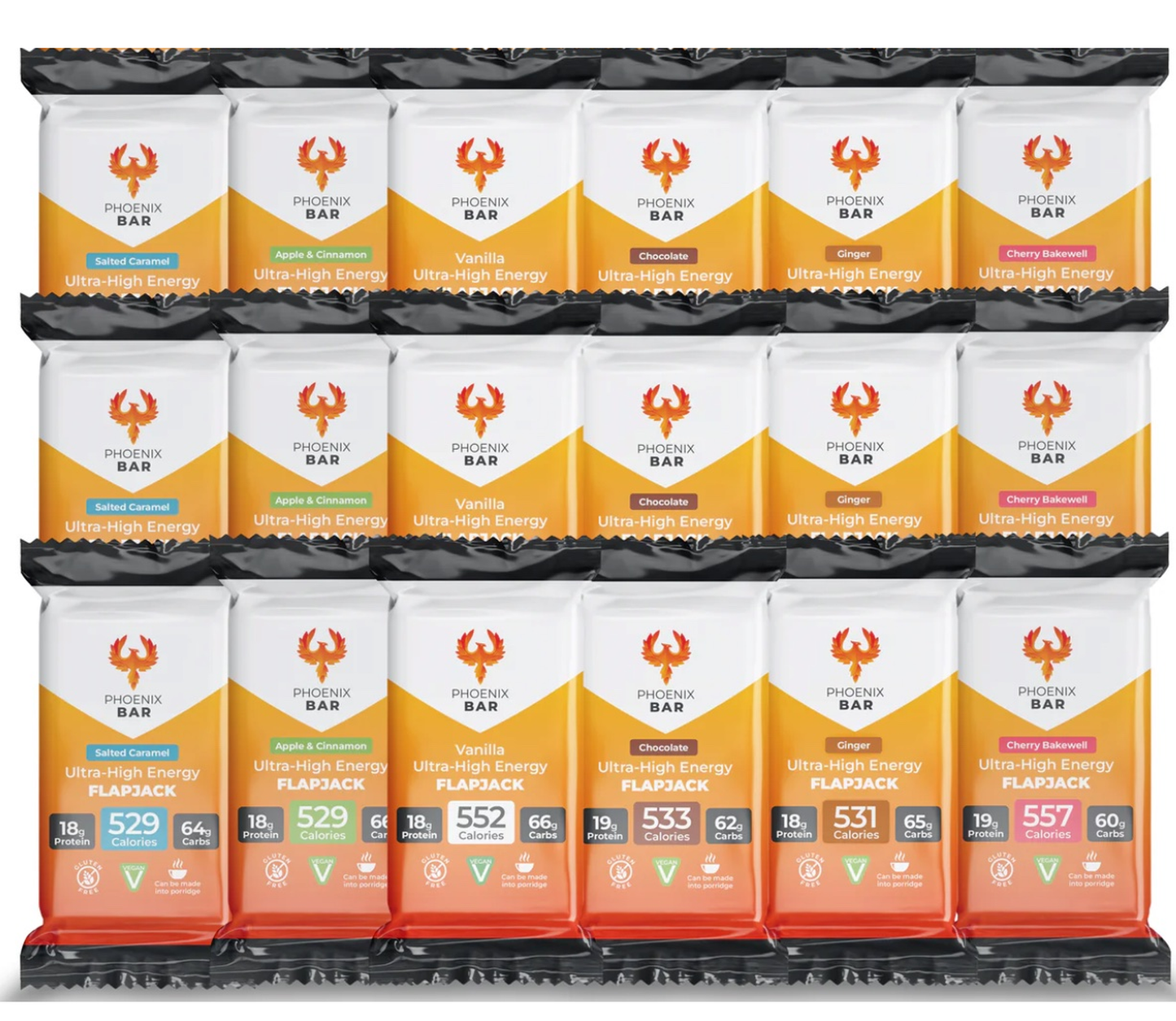
Phoenix Bars: Up to 557 Calories Per Bar
Highly compact, low-volume, calorie-dense bars. Soft, easy to eat whole or as a warm porridge. Vegan, gluten-free and contain up to 66g of carbohydrates, 19g of protein & 8 vitamins & minerals.
Between-session fuel: the gap the catering can't fill
Camp Kaizen feeds you properly: breakfast before the first session, a refuel at lunch, a big communal dinner. What the catering can't reach is the ninety minutes between the run and the gym session, the summit stop three hours into a fell hike, and the moment you climb out of the plunge needing something immediately. That gap is personal kit territory, at Kaizen and at every camp like it. The rule for what works there: dense, soft enough to eat when you don't fancy eating, no preparation, and stable in a pack in any weather, because your food might spend five hours in a bag on a Lakeland ridge. That is the exact problem high-calorie bars exist to solve, and it's why a couple in a hip pack or hiking bag is the single easiest upgrade to a camp weekend. For longer mountain days, our best energy bars for hiking guide compares the UK options on calorie density and pack weight.
Fuelling the week before camp
Arrive with full reserves. In the two or three days before camp, eat normally but don't skimp on carbohydrates, keep drinking water, and don't attempt a big training week. The camp will provide the stimulus; your job beforehand is to show up recovered and fuelled, with a couple of dense bars in your bag for the gaps.
Frequently asked questions
What is Camp Kaizen? Camp Kaizen runs multi-day hybrid training camps in the Lake District, near Scafell, combining trail runs, strength sessions, group fell hikes and daily cold plunges, with glamping and all meals included. Camps are grouped by fitness level, and they host their own mountain hybrid race each September.
How many calories do you burn on a training camp? A full hybrid camp day combining a run, a strength session and a long hike commonly reaches 4,000 to 5,000 calories once baseline burn is included. Individual numbers vary with body weight, pace and terrain.
Do training camps provide food? Good ones do, and Camp Kaizen includes all meals, locally sourced. The gap is between-session and on-mountain fuel, which is worth carrying yourself.
What snacks should I bring to a fitness camp? Calorie-dense, soft, no-prep options that survive a pack: nuts, nut butter sachets, flapjack-style bars, and high-calorie bars. Prioritise things you can eat when appetite is low.


Flaming Phoenix



Contact Us
Widerruf erklären
Füllen Sie das folgende Formular aus, um Ihre Widerrufserklärung abzugeben.

