

Best Food for Hiking: Trail Snacks and Lunches That Work
Dans ce guide

Quick answer: The best hiking food passes four tests: it carries serious energy for its weight, it survives being crushed in a pack, it needs no preparation, and you'll still want to eat it cold, tired and rained-on. The foods that pass most reliably: nuts and trail mix, oat bars and flapjacks, malt loaf, dried fruit and dates, nut butter, hard cheese with oatcakes, tortilla wraps, salted crisps, chocolate in cool weather, proper high calorie bars, and a bag of sweets for the last hill. The full list, with the numbers behind each choice, is below, day hikes first, multi-day pointers after.
Thru-hikers, who carry every meal for months, use a blunt benchmark for what goes in the food bag: roughly 4 calories per gram or better. Most lists never mention it, then recommend apples. This page runs the arithmetic openly, because I run a food company that feeds hikers from Surrey hills to serious expeditions, and weight-for-energy is the entire game. The strategy side, how much, when, and multi-day planning, lives in the full hiking nutrition guide; this is the shopping list.
The four tests of a good hiking food
Density: calories per gram decides what your shoulders pay for the energy. Nuts run about 6 per gram, nut butter similar, flapjack and malt loaf around 3 to 4, dried fruit about 3, and an apple limps in at 0.5, meaning 90 percent of its weight is water you're portering uphill. Our guide to the lightest high calorie food for backpacking runs the same comparison for multi-day loads. Durability: day three of any trip is the crush test, and soft bread, ripe fruit and biscuit-thin anything fail it. Faff: the best trail food opens with cold fingers and eats with one hand while walking. Appeal: the subtle one, because hill weather kills fussy appetites, and the food you'll actually eat at a windy summit beats the theoretically optimal food you won't.
The trail snacks worth carrying
Nuts and trail mix. The density champion at roughly 6 calories per gram, salt included if you buy smart. Build your own mix so the ratio of nuts to raisins to chocolate reflects your actual preferences rather than the manufacturer's margins.
Oat bars and flapjacks. The UK's native trail food: dense, cheap, crush-tolerant and available in every village shop en route.
Malt loaf. The quiet legend of British hillwalking, around 3 calories per gram, effectively indestructible, and somehow better squashed. A loaf of Soreen has finished more Munros than most gear brands.
Dried fruit and dates. Fast natural sugar at around 3 per gram, and dates in particular are nature's gel. Pair with nuts so the energy arrives in waves rather than a spike.
Nut butter. Squeeze packs or a small jar with a spoon: 6 calories per gram of morale. Spread it on anything or eat it straight without shame.
Hard cheese and oatcakes. The savoury answer when sweet fatigue sets in, which it always does. Hard cheeses travel a full weekend without refrigeration in UK temperatures.
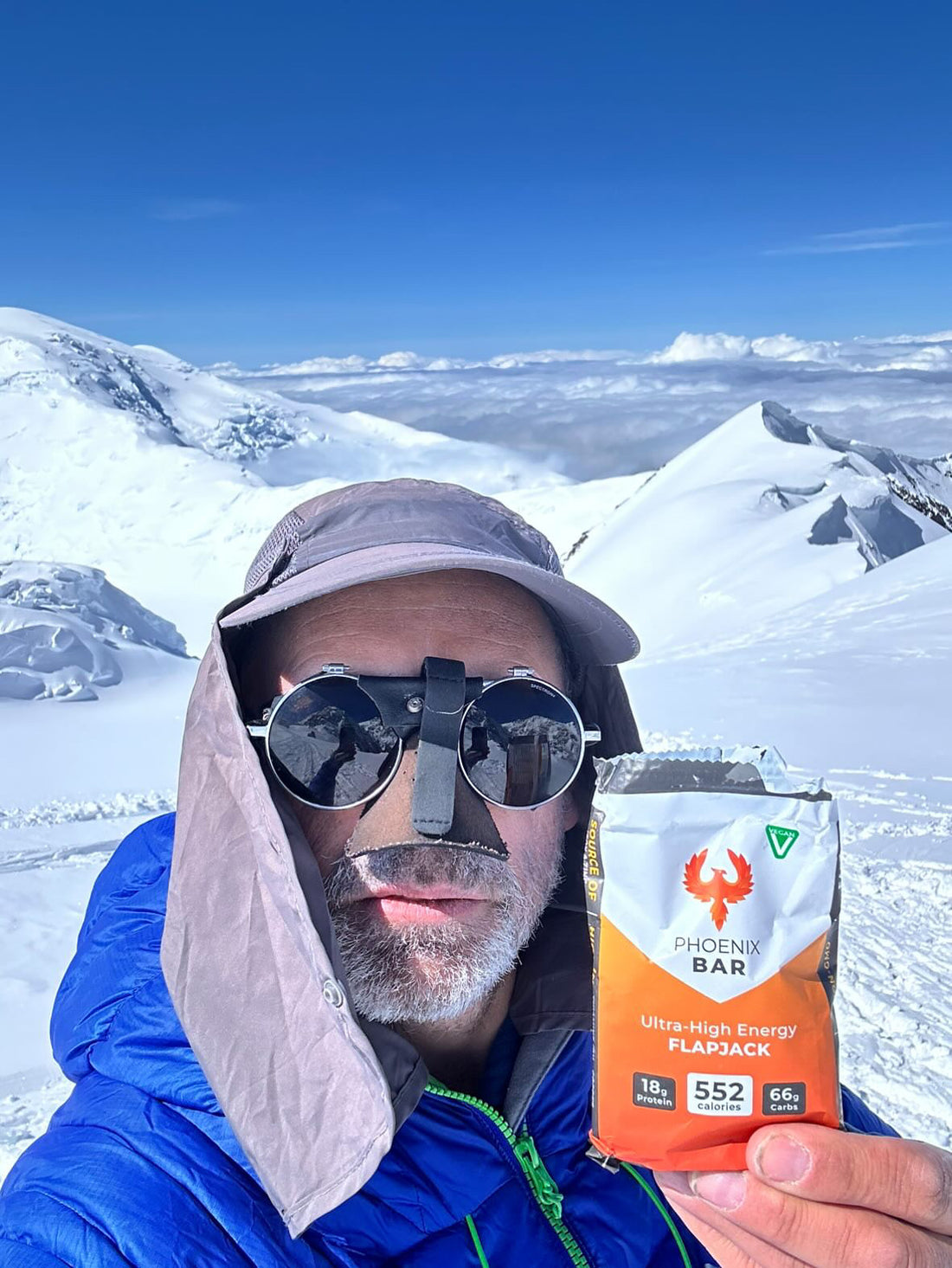
A proper energy-dense bar. This is ours: a Phoenix Bar carries up to 557 calories in 120 grams, about 4.6 per gram, which clears the thru-hiker density benchmark, needs no prep, survives being crushed in a pack, and is soft enough to eat in gloves in horizontal rain. One bar is lunch insurance; two are a summit day. For how other bars compare, see the best energy bars for hiking.
Salted crisps. Poor density but real value: salt replacement and crunch, the two things you crave on a sweaty day. Buy sturdy tubes or accept crumbs with grace.
Chocolate. Superb from autumn to spring at over 5 calories per gram, a liability in a July pack. Chocolate-coated anything follows the same seasonal rule.
Jelly sweets. Near-weightless fast sugar for the final climb, and the single highest morale-per-gram item on this page.
Day hike lunches that survive the journey
The wrap is king: tortillas shrug off compression that destroys bread, and peanut butter, cheese, or cheese-and-chutney fillings survive unrefrigerated where mayonnaise-based ones don't. Beyond wraps: pork pies, the great British trail lunch, dense, robust and self-contained; a hard-boiled egg or two; pasta salad in a screw-top pot; and the flask option, soup in winter, which turns any wet lunch stop civilised. Skip anything that needs assembly in wind or dies when squashed, and pack lunch at the top of the bag so the food you'll want at noon isn't under the waterproofs.
How much to carry
For a full day on the hills, a packed lunch plus 200 to 300 grams of snacks from the list above covers most people, eaten little and often rather than in one sitting, and always with one spare item you don't plan to touch, the habit our emergency food thinking is built on. Hunger on a hike is a lagging indicator: eat before the dip, roughly something small every hour on the move.
Multi-day trips change the maths
Once you're carrying several days of food, density stops being a preference and becomes the plan, because food becomes the heaviest single category in your pack at 700 to 1,000 grams per day. That arithmetic, and the full ration strategy, lives in the hiking nutrition guide and the food section of the multi-day kit list, with the calorie-dense foods table as the master ranking. The one-line version: everything on this page still works, you just weigh it first.
What to leave at home
Fresh fruit beyond day one, anything requiring refrigeration, standard sliced bread, biscuits that shatter, chocolate in summer, and glass jars of anything. Beautiful foods, wrong venue.
Frequently asked questions
What food should I take on a day hike? A crush-proof lunch, wraps, a pork pie, or a filled oatcake stack, plus 200 to 300 grams of dense snacks: nuts, flapjack, malt loaf, dried fruit, a proper bar, and some sweets for the last climb. For snacks sorted by when you eat them, before, during and after, see my high energy snacks guide.
What hiking foods don't melt or get squashed? Malt loaf, oat bars, nuts, dried fruit, hard cheese, tortilla wraps, pork pies and dense bars all shrug off pack life. Chocolate behaves from autumn to spring only.
How often should I eat while hiking? Little and often beats one big stop: something small roughly every hour of walking keeps energy level and prevents the mid-afternoon collapse.
Is trail mix actually good hiking food? Yes. It's the density champion at around 6 calories per gram with salt and sugar built in. Its only flaw is that the chocolate pieces vanish first.
Does the list change for multi-day hikes? The foods hold, the weights rule: at 700 to 1,000 grams of food per day carried, calories per gram becomes the selection criterion, which is covered in our hiking nutrition guide.
Written by James Frost, founder of Flaming Phoenix. We feed hikers, ultra runners and expedition teams in 21 countries, and this list is what actually gets eaten. Last updated July 2026.
Plein de calories. Petit format.
Jusqu’à 557 calories dans une barre compacte et légère de seulement 120 g, avec jusqu’à 66 g de glucides et 19 g de protéines. Mangez-la entière, en morceaux sur quelques heures, ou mélangez-la à de l’eau ou du lait pour en faire un porridge.
Facile à manger, facile à digérer et pas trop sucrée. Des clients les ont mangées à -45 °C et dans la chaleur du Marathon des Sables, et elles se conservent jusqu’à deux ans : elles conviennent en montagne, pendant un travail de nuit ou à la maison, les jours où manger suffisamment est difficile.
- 557 calories dans seulement 120 g (529 à 557 selon la saveur)
- 4,6 calories par gramme
- 66g glucides par barre (jusqu’à)
- 19g protéines par barre (jusqu’à)
Soumettre une demande de rétractation
Veuillez remplir le formulaire suivant pour soumettre votre demande de rétractation.

