
High Calorie Desserts: The Easiest Way to Add Calories
Quick answer: A high calorie dessert is a pudding built from calorie-dense ingredients like cream, nut butter, chocolate, oats and full-fat dairy, so it adds a lot of calories from a small bowl. Desserts are the easiest meal to add calories to, because sweet, rich food goes down easily and takes very little effort. A simple pudding can carry 500 to 700 calories. For the underlying principle, see calorie-dense foods.
Most meals take planning. A dessert does not. It is the one part of the day that is already built around the two most calorie-dense things in any kitchen, fat and sugar, which is exactly why it is the simplest way to add calories without much effort or a big plate.
Why are desserts the easiest way to add calories?
Because they are calorie-dense by design and they are pleasant to eat. The customers who find it easiest to add calories almost all lean on puddings rather than bigger dinners. A bowl of something sweet goes down when another plate of savoury food feels impossible, and most puddings take two minutes to put together.
Here is the part that surprises people. Stirring two tablespoons of peanut butter and a spoon of honey into a pot of full-fat yoghurt turns a 150-calorie snack into a 400-calorie pudding, with no change to how much is in the bowl. That is the whole idea with desserts: rich ingredients, small volume.
How do you make a dessert higher in calories?
The levers are the rich ingredients you stir in or spoon on top. Each one adds a lot for very little bulk.
Use full-fat dairy. Full-fat Greek yoghurt is around 150 calories for a 150g pot, against roughly 90 for a fat-free one. Make rice pudding or custard with whole milk rather than skimmed.
Add cream. Two tablespoons of double cream is about 135 calories. A swirl over a crumble, stirred into a mousse, or poured on a warm pudding lifts the whole thing.
Add nut butter and chocolate. A tablespoon of peanut butter is about 95 calories, two tablespoons about 190. A 25g square of dark or milk chocolate is around 130. Both melt into puddings easily.
Lean on oats and dried fruit. A 50g serving of oats is about 185 calories, and 30g of raisins or chopped dates about 90. They thicken and sweeten puddings while adding calories.
Finish with a topping. A drizzle of honey is about 60 calories, a 30g handful of chopped nuts about 180, a spoon of granola another 60 to 80. The last spoonful is where you top it up.
What are some easy high calorie desserts?
These are quick, mostly no-bake puddings. Each shows the components and an approximate total. Adjust portions to suit your appetite.
- Chocolate peanut butter overnight oats: 50g oats soaked in whole milk with a spoon of cocoa, two tablespoons of peanut butter, a sliced banana and a drizzle of honey. Around 650 calories, made the night before.
- A loaded yoghurt pot: a 150g pot of full-fat Greek yoghurt with granola, a handful of nuts, berries and a drizzle of honey. Around 600 calories, two minutes to assemble.
- Peanut butter chocolate banana: a banana split lengthways, topped with two tablespoons of peanut butter, melted chocolate and chopped nuts. Around 600 calories, no cooking.
- Warm fruit crumble with cream: a portion of fruit crumble with two tablespoons of double cream or a good pour of custard. Around 550 calories, the comforting option.
- Rice pudding with cream and jam: rice pudding made with whole milk, stirred through with cream and a spoon of jam. Around 500 calories, warm and soft.
- Chocolate mug cake: flour, cocoa, sugar, a little oil and milk mixed in a mug and microwaved, topped with a spoon of nut butter. Around 500 calories in five minutes.
For more sweet bites between meals, see high calorie snacks. The calories in all of these sit in the cream, nut butter and chocolate rather than the size of the bowl, which is what makes them easy.

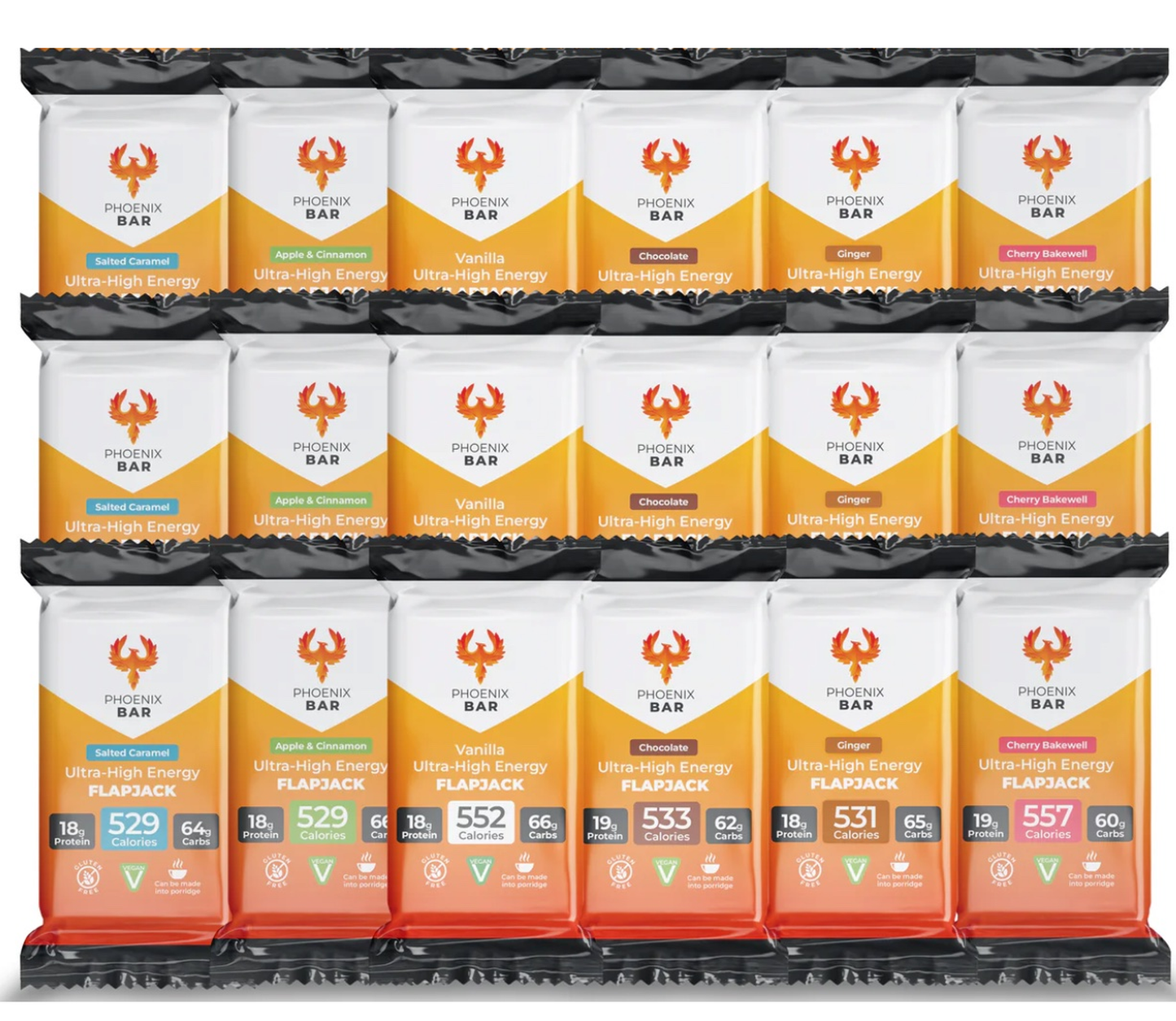
Phoenix Bars: Up to 557 Calories Per Bar
Highly compact, low-volume, calorie-dense bars. Soft, easy to eat whole or as a warm porridge. Vegan, gluten-free and contain up to 66g of carbohydrates, 19g of protein & 8 vitamins & minerals.
What can you eat for dessert when a full meal is too much?
If a full meal is too much, a pudding is often the easiest thing to manage. Sweet food tends to be more palatable when appetite is low, and a dessert asks very little of you. A milkshake, a bowl of rice pudding, or a few spoons of something rich can add a few hundred calories with no effort and no big plate.
A few simple moves. Drink it, since a milkshake or a thick smoothie goes down when a bowl of food will not, and you can sip it slowly. Keep the densest part and skip the bulk, so a small bowl of the rich pudding rather than a large portion. And keep an easy option to hand for the days you cannot face making anything. For more on this, see what to eat when you fill up after a few bites, and high calorie drinks and smoothies for milkshake ideas.
This is one place the product fits naturally. The bars come in dessert-style flavours, including Cherry Bakewell, Chocolate, Salted Caramel and Apple and Cinnamon, and each of our high calorie bars packs up to 557 calories into a 120g bar. They are vegan and gluten-free, and a bar can be stirred into hot milk to make a warm, pudding-like porridge. The idea behind our high calorie bars is maximum calories in the smallest, easiest format, which is exactly what a dessert is for.
Are high calorie desserts unhealthy?
Not by definition. Calorie density describes how much energy a food holds for its weight, not its quality. Plenty of calorie-dense puddings are built from whole foods: oats, nuts, nut butter, dried fruit, full-fat dairy and dark chocolate.
This matters because a lot of dessert advice online assumes high calorie and unhealthy mean the same thing, and pushes you towards lighter, lower-calorie options. If your aim is the opposite, to add calories, a rich pudding made from real ingredients does the job and tastes better than a stripped-back version of it.
Frequently asked questions
What is a good high calorie dessert?
A good high calorie dessert is built on rich ingredients like cream, nut butter, chocolate and full-fat dairy, landing around 500 to 700 calories from a small bowl. Examples include chocolate peanut butter overnight oats, a loaded yoghurt pot, or a warm crumble with cream. The aim is more calories from a small portion.
How do I add calories to a dessert?
Stir in or spoon on rich ingredients. Use full-fat dairy, add a couple of tablespoons of cream, melt in nut butter or chocolate, and finish with nuts, granola or honey. Each of these adds 60 to 190 calories with very little extra volume.
What are easy no-bake high calorie desserts?
Overnight oats, yoghurt pots, banana with peanut butter and chocolate, and rice pudding all need no baking. They take a couple of minutes, use everyday ingredients, and reach 500 to 650 calories by leaning on cream, nut butter and chocolate rather than a large portion.
What is a high calorie vegan dessert?
Plant ingredients can be very calorie-dense: nut butters, coconut milk and cream, dark chocolate, oats, tahini and dried fruit. A vegan high calorie dessert might be chocolate peanut butter overnight oats made with plant milk, or a coconut chocolate mousse, easily reaching 500 calories or more.
How many calories are in a high calorie dessert?
It varies, but a high calorie dessert usually means roughly 400 calories or more, and rich puddings often reach 500 to 700. A small bowl made with cream, nut butter and chocolate can hold as many calories as a main meal in a fraction of the volume.
Are high calorie desserts bad for you?
Not in themselves. High calorie simply means energy-dense. Many calorie-dense puddings are made from whole ingredients like oats, nuts and full-fat dairy. Whether a dessert suits you depends on your overall diet and what you are trying to do, not the calorie figure alone.
Related guides
For the rest of the day, see high calorie breakfast ideas, high calorie lunch ideas and high calorie dinner ideas. For liquid options, see high calorie drinks and smoothies. For the porridge method and how to eat a bar, see how to use Phoenix Bars.
Written by James Frost, Founder of Flaming Phoenix. James started Flaming Phoenix in 2024 and has spent the years since working out how to get the most calories into the least food, building and testing compact, calorie-dense recipes. He can be reached at jfrost@flaming-phoenix.co.uk. Last reviewed: June 2026.


Flaming Phoenix



Contact Us
Soumettre une demande de rétractation
Veuillez remplir le formulaire suivant pour soumettre votre demande de rétractation.

