

Field Nutrition for Aid Workers and Humanitarian Field Teams
Dans ce guide

NGO and humanitarian field teams working in remote or disrupted places need food for themselves that keeps without refrigeration, is light to carry, dense in calories, and easy to eat when there is no time or facility to cook. This guide covers food for the staff themselves on long days in difficult conditions, not food for affected populations, which is a separate and highly specialised field with its own regulated products and supply chains.
Why field-team nutrition is its own problem
Field and response teams often deploy at short notice into places where the ordinary food supply has been disrupted, where there is no kitchen, no fridge, and no certainty about the next reliable meal. Days are long, the work is physical, meals are irregular, and staff still have to stay sharp and make good decisions. In that environment, the food a worker carries for themselves has to travel well, keep without refrigeration, and be edible with no preparation. Much of what a team eats will be sourced locally or come from standard rations, but a personal reserve of calorie-dense food covers the gaps when nothing else is available. The same readiness logic underpins all emergency food preparedness.
What field-team food needs to do
Food carried by a deployed worker has to do several things at once: keep safely without refrigeration, last a long time unopened so it can be pre-positioned in field kits, pack a lot of energy into little weight and space, be edible with no cooking, and suit a mixed international team with varied diets. Anything that spoils quickly, needs preparation, or only works for some team members fails one of those tests. Expedition teams apply much the same tests when choosing the best energy bars for expeditions.
Shelf life matters more here than people expect, because field kits and deployment bags are often packed in advance and held ready. A food with a long shelf life can sit in a go-bag or a pre-positioned store for many months and still be good when it is needed. As a reference point, sealed high calorie bars such as Phoenix Bars keep for up to two years (12 months for Cherry Bakewell), long enough to pre-position rather than restock every few weeks.
The energy demand of field deployment
Field work is demanding: long hours on foot, manual tasks, broken sleep, stress, and often heat or cold on top. The practical aim is steady, reliable energy across an unpredictable day rather than depending on sit-down meals that may not happen. Food that delivers a lot of energy per gram makes that possible without adding weight to a pack already carrying equipment, which is the principle behind these calorie-dense foods. Where deployments run into the night or across shifting shift patterns, the same logic as night shift nutrition applies, keeping energy steady through the hours when it is hardest to maintain.
Heat, cold and difficult conditions
Field deployments span climates, and food that holds up in one can fail in another. Many bars and snacks soften or melt in heat and harden or freeze in the cold. Phoenix Bars have been used at both ends of the range: one customer found them easy to eat at -45°C on a South Pole expedition, and a Marathon des Sables runner said they kept their shape even in desert temperatures. Mixed with water, the same bar can be made into a high-calorie porridge at the end of a long day, using the method set out in how to make a Phoenix Bar into porridge.
Mixed teams and dietary needs
International field teams bring a wide range of dietary needs, and field conditions make catering for all of them difficult. A food that works for everyone simplifies that. Phoenix Bars are both vegan and gluten-free, which means a single item covers the whole team regardless of diet, without packing separate options for different people.
Where Phoenix Bars fit
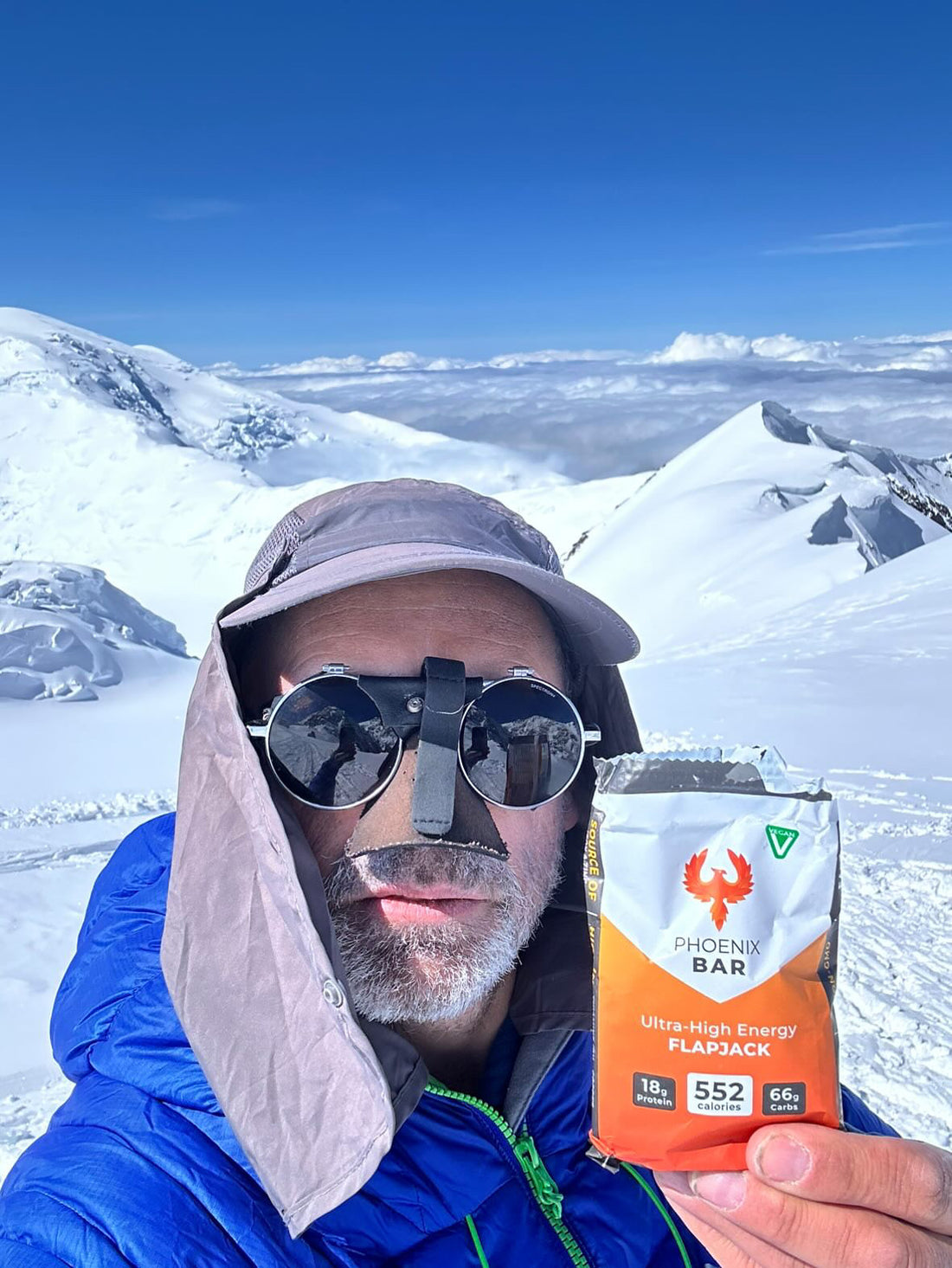
Most of what a field team eats will and should come from local sourcing or established field rations. Phoenix Bars work as the personal reserve in a field kit: up to 557 calories in only 120g so the calories are there for little weight, up to two years sealed so they hold in pre-positioned kits, no cooking required, and vegan and gluten-free so they work for any team member. The Starter bundle is a straightforward way to assess them, and the Essential bundle suits stocking field kits or a deployment bag.
For NGOs and field-team logistics
If you are equipping field teams rather than yourself, the priorities are shelf life, dietary coverage across a mixed group, predictable energy that needs no preparation, and food that survives the climates your staff deploy into. Our high-calorie nutrition bars come in bundles suited to stocking deployment kits, and we can arrange bulk supply for organisations equipping their own field and response staff. Get in touch through the contact page to discuss it. This is supply for your deployed teams and field staff, not for population-level feeding programmes, which sit with specialist humanitarian food suppliers.
Frequently asked questions
What food do aid workers take on deployment? Food that keeps without refrigeration, needs no cooking, packs a lot of energy into little weight, and lasts a long time unopened. In practice that means shelf-stable items such as bars, nuts and dried staples, carried as a reliable personal reserve alongside whatever is sourced locally or supplied as standard rations.
What food keeps without refrigeration in the field? Sealed, shelf-stable foods with a long shelf life. Dried and concentrated foods, and bars with a long unopened life, keep safely without a fridge and can be carried or pre-positioned in field kits well in advance of a deployment.
How do you keep field food light? Avoid anything wet or tinned that you do not need to carry, and choose energy-dense foods that provide more calories per gram. This keeps a worker's personal food reserve light enough not to add meaningful weight to a pack already carrying operational equipment.
Is the same food suitable for hot and cold climates? Only if it is formulated to be. Many foods soften or melt in heat and harden or freeze in cold. Foods with a fat base that resists both extremes stay edible in whatever climate a team deploys into, even when one kit goes to a hot posting and then a cold one.
Can field food be pre-positioned in advance? Yes, provided it has a long shelf life. Food that keeps for a year or more sealed can be packed into deployment bags and pre-positioned stores and stay good for months, so nobody has to keep restocking and the food is ready when a team deploys at short notice.
Written by James Frost, founder of Flaming Phoenix. James developed Phoenix Bars after more than 150 conversations with people who need to keep eating well in hard conditions, and supplies bars to endurance athletes and expedition teams. Read more on the my story page.
Plein de calories. Petit format.
Jusqu’à 557 calories dans une barre compacte et légère de seulement 120 g, avec jusqu’à 66 g de glucides et 19 g de protéines. Mangez-la entière, en morceaux sur quelques heures, ou mélangez-la à de l’eau ou du lait pour en faire un porridge.
Facile à manger, facile à digérer et pas trop sucrée. Des clients les ont mangées à -45 °C et dans la chaleur du Marathon des Sables, et elles se conservent jusqu’à deux ans : elles conviennent en montagne, pendant un travail de nuit ou à la maison, les jours où manger suffisamment est difficile.
- 557 calories dans seulement 120 g (529 à 557 selon la saveur)
- 4,6 calories par gramme
- 66g glucides par barre (jusqu’à)
- 19g protéines par barre (jusqu’à)
Soumettre une demande de rétractation
Veuillez remplir le formulaire suivant pour soumettre votre demande de rétractation.

