

Food for Caving: What to Eat Underground on Long Trips
Dans ce guide

The short answer: pack food that is calorie dense, physically tough, and easy to eat with cold, muddy hands. A long underground trip can burn 2,000 to 2,800 calories, yet surveyed cavers tend to eat only 1,000 to 1,200 while they are down there, so the real job is closing that gap with the smallest, most durable food you can carry. In practice that means concentrated calories: nuts, dried fruit, chocolate, flapjack, and high calorie bars, sealed inside a Daren drum so they survive the crawls, sumps and ducks. On cold or wet trips, warmth matters as much as the calories, so pack a flask of hot water and food you can turn into a hot meal underground. Everything below explains how to get this right, from what caving actually does to your body to a simple food plan for a full day underground.
About this guide
I'm James Frost, founder of Flaming Phoenix. We make Phoenix Bars, a 120g vegan, gluten-free bar built to deliver a large number of calories in a small, easy-to-eat package, which is the problem caving creates. I'm not a caving instructor, so where this guide gets technical I lean on two things: published research on caver energy expenditure, and the hard-won habits of UK club cavers who have been doing long trips for decades. If you are new to the sport, learn the ropes through a British Caving Association club or a qualified leader first. This page is about the food. Last reviewed June 2026.
Key points
- A long cave trip burns roughly 225 to 287 calories an hour, so 8 to 12 hours underground can mean 2,000 to 3,000 calories, before cold makes it worse.
- Most cavers under-eat underground, taking in only 1,000 to 1,200 calories on a full day, then loading up afterwards.
- The best caving food is calorie dense, low volume, and tough enough to survive being dragged through crawls and sumps.
- Caves sit at a constant 8°C to 11°C in most UK systems, so warm food and a hot flask are worth the weight on wet trips.
- A sealed Daren drum keeps food dry, clean and crush-resistant where a soft wrapper will not.
- Two Phoenix Bars deliver over 1,000 calories in roughly the space of a mobile phone, and can be mixed with hot water into a warm porridge underground.
Contents
- How many calories does caving burn?
- Why eating underground is harder than eating on a trail
- What to pack: food that survives a cave
- Matching food to the trip: day trip, vertical, and camp
- How to pack food in a Daren drum
- Where Phoenix Bars fit
- A simple food plan for a full day underground
- Frequently asked questions
1. How many calories does caving burn?
Caving burns more energy than most people expect, and far more than they replace while underground. The most detailed study on this, published in the journal PLOS ONE, put cavers in real cave systems wearing portable metabolic analysers across a 10-hour exploration. It measured a total energy expenditure of 225 to 287 calories an hour, in the same ballpark as a steady hike, but sustained for far longer and in much harsher conditions.
Run the maths on a normal UK club trip. Eight hours underground at that rate is roughly 1,800 to 2,300 calories. A bigger Yorkshire Dales or South Wales day, ten or twelve hours from changing room to surface, climbs toward 2,500 to 3,000 calories of work.
The same research found something more useful for planning. The cavers surveyed only ate 1,000 to 1,200 calories during the trip itself, then put most of their intake into a large meal afterwards. In other words, people routinely run a calorie deficit of a thousand calories or more while they are actually caving, which is exactly when fatigue, poor decisions and cold start to bite.
Cold makes the gap wider. UK caves hold a constant temperature of around 8°C in the Yorkshire Dales and roughly 11°C on Mendip, year round, and much of a trip is spent wet, still, or moving slowly through water. Keeping your core warm costs energy, and once you start shivering, your body can burn calories considerably faster than at rest. The food plan that works on a summer hill walk is not enough underground.
2. Why eating underground is harder than eating on a trail
Cavers under-eat because the cave fights you at every step of getting food from bag to mouth. Five things make underground eating uniquely awkward, and good food choices solve all five at once.
It is cold and often wet. A constant 8°C to 11°C feels far colder when you are damp and standing in a draughty streamway waiting for the rest of the group. Cold hands make fiddly packaging miserable, and cold, dense food like a chilled flapjack can be hard work to chew.
Space is the whole point of the sport. You squeeze through gaps, crawl flat-out, and haul a tackle bag behind you on rope. Bulky food is a liability. What you want from caving food is calories per cubic centimetre, because every litre in the bag is a litre you have to drag through a tight rift.
Your hands are busy and filthy. Between climbing, rigging, SRT and crawling, your hands are rarely clean and rarely free. Food you can open and eat one-handed, without unwrapping six layers or making crumbs, gets eaten. Food that needs a clean surface and two hands does not.
There is no daylight and no clock. Time blindness is real underground. Without daylight cues, people simply forget to eat, then realise three hours in that they are cold, flat and irritable. Pre-portioned food that you can grab at every natural pause beats one big lunch you keep putting off.
The cave destroys soft food. Anything in the bag gets dragged, dropped, submerged and crushed. Cavers joke that a Mars bar is the perfect caving snack because it is still edible after being hauled through crawls, sumps and ducks. Sandwiches arrive as paste. The food has to be built for abuse, or protected by something that is.
3. What to pack: food that survives a cave
Good caving food meets three tests at once: high in calories, small in volume, and tough enough to take a beating. The classic caver staples score well on energy density and durability, which is why they have stuck around.
The research on caver habits found the same shortlist that any UK club hut would recognise: dried fruit, nuts, chocolate, energy bars, hard cheese and honey. They are chosen because they avoid heavy loads over long distances and are easy to digest while you are working hard. Flapjack is the British addition to that list, and a good one is close to the ideal caving food: oats, fat and sugar pressed into a dense, durable block.
Then there is what to leave at home. Fresh sandwiches and soft fruit turn to mush. Anything that makes crumbs leaves a mess in a place you should be leaving untouched, so most cavers carry a bag for wrappers and peel and take everything back out. Strong-smelling food like tuna or sardines is a well-known way to make yourself unpopular in a confined space with no airflow.
The property people underrate is the option of warmth. On a long wet trip, a flask of hot water transforms the experience, and food that can be turned into a hot drink or a hot meal underground does more for morale and core temperature than the same calories eaten cold. This is where instant porridge, soup and anything you can rehydrate with boiling water comes into its own.
For the highest energy density in the smallest, most rugged package, a purpose-built high-calorie bar beats most of the alternatives, which is the gap our Phoenix Bars are designed to fill. Our ranking of the best energy bars for expeditions compares the main options, and section 6 covers where Phoenix Bars fall short underground.
4. Matching food to the trip: day trip, vertical, and camp
How much and what you carry depends far more on the type of trip than on the named cave. There are three broad cases, and they call for different food.
The horizontal day trip. Beginner and intermediate trips like Long Churns, Great Douk or Goatchurch Cavern are walking, scrambling and crawling without serious rope work, often two to four hours underground. Many guided introductory sessions ask you to eat a good meal beforehand and take little or nothing inside, which is sensible for a short trip. For your own club trips of this length, a couple of dense snacks in a pocket or a small tackle bag is plenty: a high-calorie bar and a handful of nuts will cover it. Front-load a proper breakfast, because the trip is too short to fully refuel during it.
Vertical and SRT trips. Once you are on Single Rope Technique, abseiling pitches and prusiking back out, the day gets longer and the work gets harder. These trips routinely run eight hours or more, and the energy cost of climbing rope with a tackle bag is significant. Here you want pre-portioned food you can reach at the head of a pitch or in a rebelay loop without unpacking the whole bag, plus a hot flask for the cold waits while the group rigs and de-rigs. This is the trip where the calorie gap from section one really opens up, so carry more than feels necessary. Our Essential bundle of 18 bars is a sensible block to draw a few trips' worth of fuel from.
Multi-day and camp trips. Expedition caving, underground camps, and the deepest systems are a different discipline, where food is logistics. Everything has to be light, compact, watertight and high in energy, because you are carrying days of calories through the cave to an underground camp. This is exactly the territory where freeze-dried meals, dense bars and anything you can rehydrate with hot water dominate, for the same reasons they dominate polar and high-altitude expeditions. If you are planning at this level, the principles on our high-altitude mountaineering nutrition guide and expedition and wild camping food guide carry straight across, and the Complete bundle of 36 bars is built for stocking a multi-day kit.
5. How to pack food in a Daren drum
A Daren drum is the standard UK solution to keeping food dry, clean and crush-proof underground. It is a screw-top HDPE container with an O-ring seal, named after Daren Cilau in South Wales, and it lives inside your tackle bag taking the abuse so your food does not. A soft wrapper alone will not survive a wet, dragged tackle bag. A drum will.
Pack it to be used, not just to be carried. Portion food into grab-and-go pieces before the trip, so you are not wrestling a big block with cold hands at a pitch head. Put the snacks you will eat first near the top. Keep a separate small bag inside for wrappers and waste so nothing is left in the cave.
For longer trips, the warm option is worth planning around. Carry a flask of just-boiled water, and pack food you can add it to: instant porridge, soup, or our bars broken up and mixed into a hot bowl. A drum of dense bars plus a flask is a light way to carry a thousand-plus warm calories. You can browse the full range in the Phoenix Bars collection and the bundles collection to build a kit that fits your drum.
6. Where Phoenix Bars fit
Phoenix Bars exist to solve one problem: getting a lot of calories into people who are working hard in places where eating is awkward. Caving is close to the perfect example of that problem, so here is the honest case for and against carrying them underground.
The case for is mostly about density and durability. Each Phoenix Bar packs up to 557 calories into a single, compact 120g bar, so two bars deliver over 1,000 calories in roughly the volume of a mobile phone, which closes most of the typical underground calorie gap in a package that barely takes up room in your drum. They hold together in the drum rather than crumbling, they are vegan and gluten-free so they work for a mixed club group without anyone needing a special option, and they come in six flavours (Apple and Cinnamon, Cherry Bakewell, Chocolate, Vanilla, Salted Caramel and Ginger) so you are not eating the same thing on hour ten that you ate on hour one.
Underground, you can eat them cold or mix one with hot water from a flask into a warm porridge. On a cold, wet SRT trip, a hot bowl made from a bar and a flask does more for you than the same calories eaten cold, both for core warmth and for morale.
The limitations: they are a fuel source, so for multi-day camps you will still want hot meals alongside them. They are dense, so on a short two-hour beginner trip you may only want half a bar. And they are a premium product at £5.25 a bar, which is more than a supermarket flapjack. What you are paying for is the calorie density and the format, which is what caving rewards.
To try them, start with the Starter bundle of 12 bars, enough to test them across a few trips before committing to a larger kit.
7. A simple food plan for a full day underground
Here is a worked example for a long UK day trip, roughly ten hours underground in a cold, wet system, aiming to close the calorie gap rather than ignore it.
Before you go, eat a substantial breakfast: oats, nut butter, banana, the kind of slow-burning meal that sets you up for hours of work. The trip itself is too long to fuel on the day's intake alone, so the calories you bank beforehand matter.
In the drum, pack for grazing, not for one lunch. Aim for around 1,500 to 2,000 calories of dense, durable food split into pieces you can eat at every natural pause: two high-calorie bars, a bag of mixed nuts and dried fruit, a block of flapjack, and a few squares of chocolate. Add a flask of hot water and something to rehydrate, so you have one warm stop in the middle of the trip.
Drink steadily. The same research flagged a real risk of dehydration on long underground trips, and it is easy to forget to drink when you are not visibly sweating in the cold. Sip regularly rather than waiting until you are thirsty.
Afterwards, refuel properly and soon. Cavers naturally do this, putting the biggest meal of the day into the post-trip pub or hut feed, which is the right instinct. The goal underground is simply to take the edge off the deficit so you finish the trip warm, sharp and safe, not depleted.
8. Frequently asked questions
How many calories do you burn caving?
Measured caver energy expenditure is roughly 225 to 287 calories an hour, so a typical 8-hour trip burns around 1,800 to 2,300 calories and a long 10 to 12 hour day can reach 2,500 to 3,000. Cold conditions push that higher, because keeping your core warm and shivering both cost extra energy.
What is the best food to take caving?
Calorie-dense, durable, easy-to-eat food: nuts, dried fruit, chocolate, flapjack and high-calorie bars. The priorities are energy per gram, small volume for tight passages, and toughness, since anything soft gets crushed in the bag. On cold or wet trips, add a hot flask and food you can rehydrate.
What do cavers eat on long expeditions?
On multi-day and camp trips, cavers rely on light, compact, watertight, high-energy food: freeze-dried meals, dense bars, instant porridge and anything you can rehydrate with hot water. The logic mirrors polar and high-altitude expeditions, where weight and volume are the constraints and warm food supports morale and core temperature.
Do you need to eat on a short caving trip?
On a two to four hour beginner trip, a good meal beforehand and a snack or two is usually enough, and many guided sessions ask you to eat before rather than carry food in. The calorie gap really opens up on longer SRT and expedition trips, where you should carry and eat steadily throughout.
What is the best vegan food for caving?
Nuts, dried fruit, dark chocolate, vegan flapjack and plant-based high-calorie bars all work well and avoid the smell and spoilage problems of meat or fish underground. A vegan, gluten-free bar is a simple way to fuel a mixed club group without anyone needing a separate option.
How do you keep food dry and crush-proof underground?
Use a Daren drum: a screw-top, O-ring-sealed HDPE container that sits inside your tackle bag and protects food from water, mud and crushing. Portion food into grab-and-go pieces before the trip and keep a small bag for wrappers so nothing is left in the cave.
Related guides
If you cave as part of a wider outdoor life, these guides cover the same calorie-density problem in other settings: high-altitude mountaineering nutrition, food for wild camping and expeditions, and our broader guide to calorie-dense foods.
Stock your drum
Fuel your next trip underground. Try the Starter bundle (12 bars) or stock a full kit with the Essential and Complete bundles. Over 1,000 calories in two bars, the size of a phone, ready to eat cold or warm.
Questions about fuelling a specific trip, or want a club order? Email me directly at jfrost@flaming-phoenix.co.uk. James Frost, founder, Flaming Phoenix.
Plein de calories. Petit format.
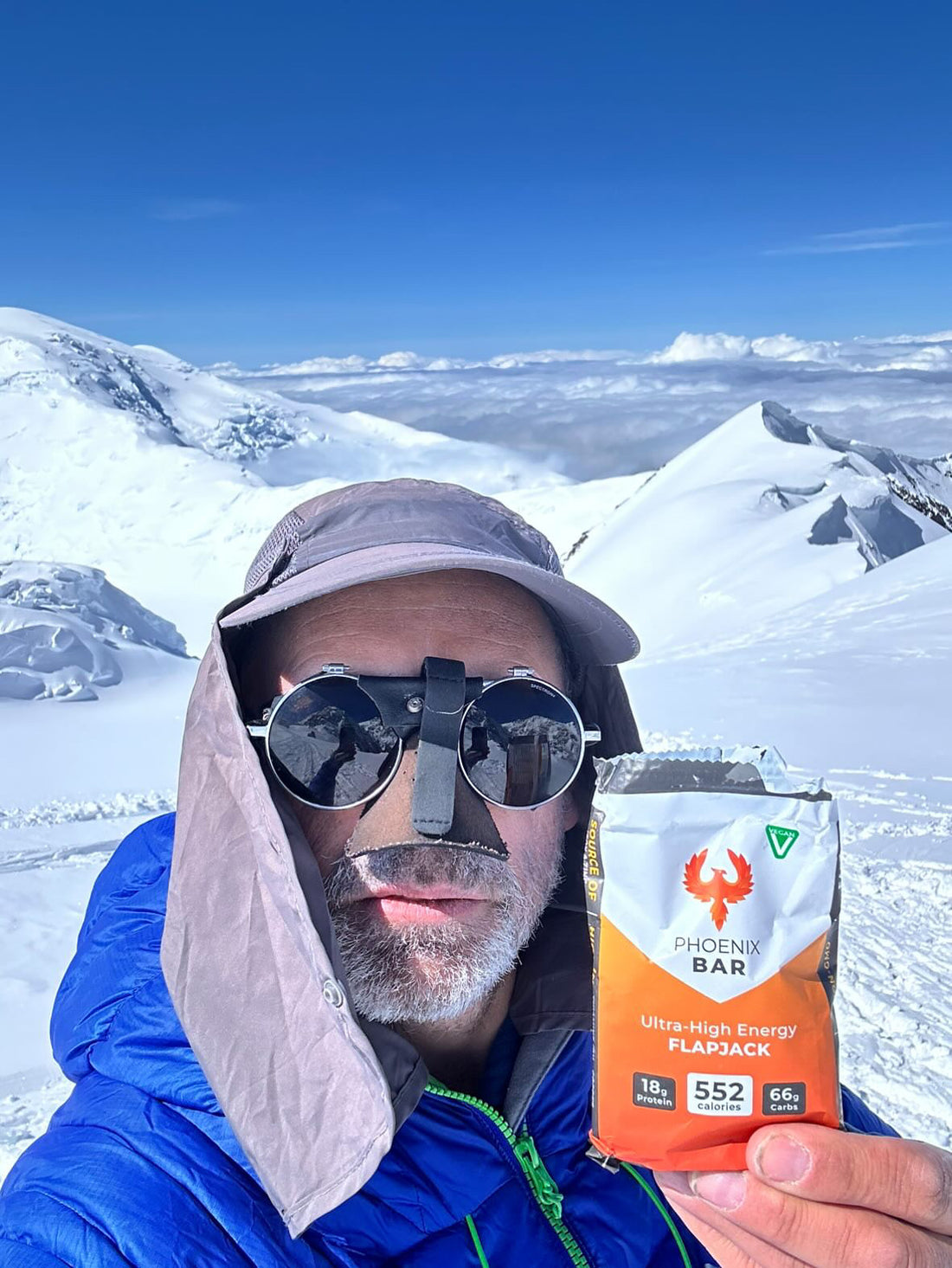
Jusqu’à 557 calories dans une barre compacte et légère de seulement 120 g, avec jusqu’à 66 g de glucides et 19 g de protéines. Mangez-la entière, en morceaux sur quelques heures, ou mélangez-la à de l’eau chaude ou du lait chaud pour en faire un porridge.
Facile à manger, facile à digérer et pas trop sucrée. Des clients les ont mangées à -45 °C et dans la chaleur du Marathon des Sables, et elles se conservent jusqu’à deux ans : elles conviennent en montagne, pendant un travail de nuit ou à la maison, les jours où manger suffisamment est difficile.
- 557 calories dans seulement 120 g (529 à 557 selon la saveur)
- 4,6 calories par gramme
- 66g glucides par barre (jusqu’à)
- 19g protéines par barre (jusqu’à)
Soumettre une demande de rétractation
Veuillez remplir le formulaire suivant pour soumettre votre demande de rétractation.

