

What to Pack for a Multi-Day Hike: The Complete Kit List
Dans ce guide

Quick answer: Everything you need for a multi-day hike fits into six categories: your pack (45 to 60 litres), a sleep system, a layered clothing setup, cooking and water kit, food, and navigation and safety essentials. Aim for a base weight, meaning everything except food, water and fuel, of 8 to 12kg for UK three-season hiking, and remember the rule that makes packing simple: almost nothing in your bag scales with trip length except food, fuel and battery. A five-day pack should look nearly identical to a two-day pack, just heavier in one category. The full list, the weights, and the things to leave at home are below.
This list is built from an unusual vantage point. I run a food company that supplies multi-day hikers, thru-hikers and expedition teams, people walking the West Highland Way, crossing deserts, heading to altitude, and after years of conversations about what's in their packs, what they wished they'd carried and what they posted home halfway through, the same kit list keeps emerging. This is that list, UK-flavoured, with the weight arithmetic most packing guides skip.
The weight rules before the list
Two numbers matter. Base weight is everything you carry except food, water and fuel, and for UK three-season hiking, 8 to 12kg is a sensible target, with dedicated lightweight hikers getting to 6 to 8kg and gram-counters lower still. Total weight is what's actually on your back on day one, and this is where trips go wrong, because food and water are the variables. Water is heavy at a kilo per litre but the UK hills are generous with refills, so you rarely need to carry more than a litre or two at a time. Food is the sneaky one: at typical hiking rations of 700g to 1,000g per day, a five-day unsupported carry means 3.5 to 5kg of food, which is usually more than your tent, sleeping bag and mat combined. Nobody tells beginners that the heaviest thing in their pack is dinner. We'll deal with it in the food section, because it's also the easiest weight to engineer down; for the foods that carry the most calories per gram, see our guide to the lightest high calorie food for backpacking.
The pack
For multi-day hiking with camping kit, 45 to 60 litres covers almost everyone; if you need more, the problem is usually inside the bag rather than the bag itself. Add a rain cover, and more importantly, line the inside with a rubble sack or use dry bags, because in UK weather a rain cover alone is optimism. Colour-coded dry bags also solve the daily archaeology problem of finding anything.
The sleep system
Tent, sleeping bag, mat. This trio is the biggest chunk of your base weight and the best place to invest for weight savings. A one-to-two person backpacking tent at 1 to 2kg, a three-season sleeping bag suited to UK nights (down packs smaller, synthetic shrugs off damp better, and damp is our national condition), and an inflatable mat, which justifies itself over foam the first cold night you spend on one. An inflatable pillow is 60 optional grams that buys real sleep; a dry bag stuffed with your down jacket does the same job for free.
Clothing: the layer system, and less of it than you think
Think in layers, not outfits. On the move: a wicking base layer, a fleece or light midlayer, and a waterproof shell jacket that you should never skimp on, plus waterproof overtrousers, because UK forecasts are suggestions. Zip-off or quick-dry trousers are worth the money. In the pack: one spare hiking top, one warm layer for camp (down or synthetic jacket), a full change for sleeping, hat, gloves and a buff. On your feet, whatever boots or trail shoes your feet already trust, never new ones, with two or three pairs of decent wool-blend socks, one pair kept sacred and dry for sleeping. That's it. The most common packing mistake on any trail is a third, fourth and fifth outfit; clothes don't scale with days, laundry standards do.
Cooking and water
A small canister stove, one gas canister (two beyond four days), a single pot or large mug you cook and eat from, a spork, and a lighter plus a backup. A water filter or purification tablets turn every UK stream into a refill point, which is what lets you carry one litre instead of three, one of the cheapest weight savings available. Add a soft bottle or bladder for capacity on drier stretches, and a small sponge or cloth for washing up. Leave the plates, the second pot and the coffee press at home.
Food: the category that actually grows
Here's where the day-scaling maths bites, and where you can fight back. The lever is calorie density: the more energy each gram carries, the less food weight you haul. Standard dehydrated meals, nuts, nut butters, oats, cheese and chocolate all sit at the dense end of the spectrum, our calorie-dense foods guide ranks the field, while fresh fruit, tins and bread are luggage. Plan roughly per day: breakfast, an evening meal, and then more daytime food than feels reasonable, because hiking hunger is real and mid-walk fuelling is where most people run short. Sort your pocket food before your camp food: nuts, chocolate and high calorie bars you'll actually eat while moving, in weather, without stopping. This is exactly the job Phoenix Bars were built for, up to 557 calories in a compact, lightweight 120g bar, about 4.6 calories per gram, which is why they keep ending up in packs on the West Highland Way and a lot further afield; swapping half a kilo of average snacks for the same energy in denser form is the easiest kilo you'll ever not carry. Add one spare day's food as insurance, ideally something that needs no cooking, our emergency food guide covers the logic. For the full eating strategy, day-by-day quantities and resupply planning, that all lives in our hiking nutrition guide, which is this section's big sibling.
Navigation and safety
A paper map and compass you know how to use, plus the phone apps as the convenience layer, not the only layer, with the route downloaded offline. A power bank sized to your trip (10,000mAh covers most weekends), a headtorch with spare charge or batteries, a whistle, a basic first aid kit built around blister care, painkillers and tape, and an emergency shelter or bivvy bag, which weighs 100 to 300g and is the item you'll hopefully never unwrap. Tell someone your route and your expected finish before you lose signal. Pack all of it even when the forecast looks kind.
The small stuff and the honest extras
Toiletries stay travel-sized: toothbrush and paste, sunscreen, lip balm, a strip of wipes, biodegradable soap, and in the UK from late spring to autumn, midge repellent, which in Scotland is not a toiletry but survival equipment. A lightweight trowel and bags for waste, because leave no trace includes that. Worth-their-grams extras: trekking poles (knees on descents will vote yes), a sit mat, earplugs, and a small luxury of your choosing, one, singular. Leave at home: jeans, a towel bigger than a face cloth, the full first aid pharmacy, glass anything, the second camp outfit, and the just-in-case pile, which is where the mystery kilos live.
What changes when the trip gets longer
Almost nothing, and internalising that transforms your packing. Between a two-day and a five-day hike, the tent, clothes, cooking kit and safety gear stay identical; what grows is food at 700 to 1,000g per day, a second gas canister, and battery capacity. So the skill of multi-day packing isn't owning more gear, it's holding base weight flat and managing the one line that scales, which loops back to density: the higher the calories per gram of what you eat, the flatter that line grows. Resupply points, shops, cafés and pubs along the National Trails, flatten it further by letting you carry two days of food on a five-day route.
The condensed kit list
Pack: 45 to 60L rucksack, rain cover, dry bags or liner. Sleep: tent, three-season bag, inflatable mat, pillow optional. Worn and carried clothing: base layer, midlayer, waterproof jacket and overtrousers, trousers, hat, gloves, buff, spare top, camp insulation layer, sleep clothes, three pairs of socks, trusted footwear. Kitchen: stove, gas, pot, spork, lighter times two, filter or tablets, bottles for two litres. Food: breakfasts, evening meals, generous daytime food, one spare day. Safety: map, compass, offline route, power bank, headtorch, first aid and blister kit, whistle, emergency shelter. Small stuff: trowel and bags, sunscreen, midge repellent, wipes, toothbrush, one luxury.
Frequently asked questions
How big should my pack be for a multi-day hike? 45 to 60 litres if you're camping. Bigger packs get filled, not needed.
How heavy should my pack be? Base weight of 8 to 12kg for UK three-season conditions is a solid target, with total weight on day one typically 3 to 6kg above that depending on days of food and water carried.
How much food should I pack per day? Around 700 to 1,000g per day at good calorie density, weighted toward food you'll eat while walking. The complete breakdown is in our hiking nutrition guide.
Boots or trail shoes? Whichever your feet already know. Ankle support versus lightness is a real trade-off, but broken-in beats either.
What do people most regret packing? Extra clothes, oversized toiletries and just-in-case items. What they regret not packing: enough daytime food, spare socks and midge repellent. For the daytime food, see our guide to the best energy bars for hiking.
Written by James Frost, founder of Flaming Phoenix. We feed multi-day hikers, ultra runners and expedition teams in 21 countries, and this list is theirs as much as mine. Last updated July 2026.
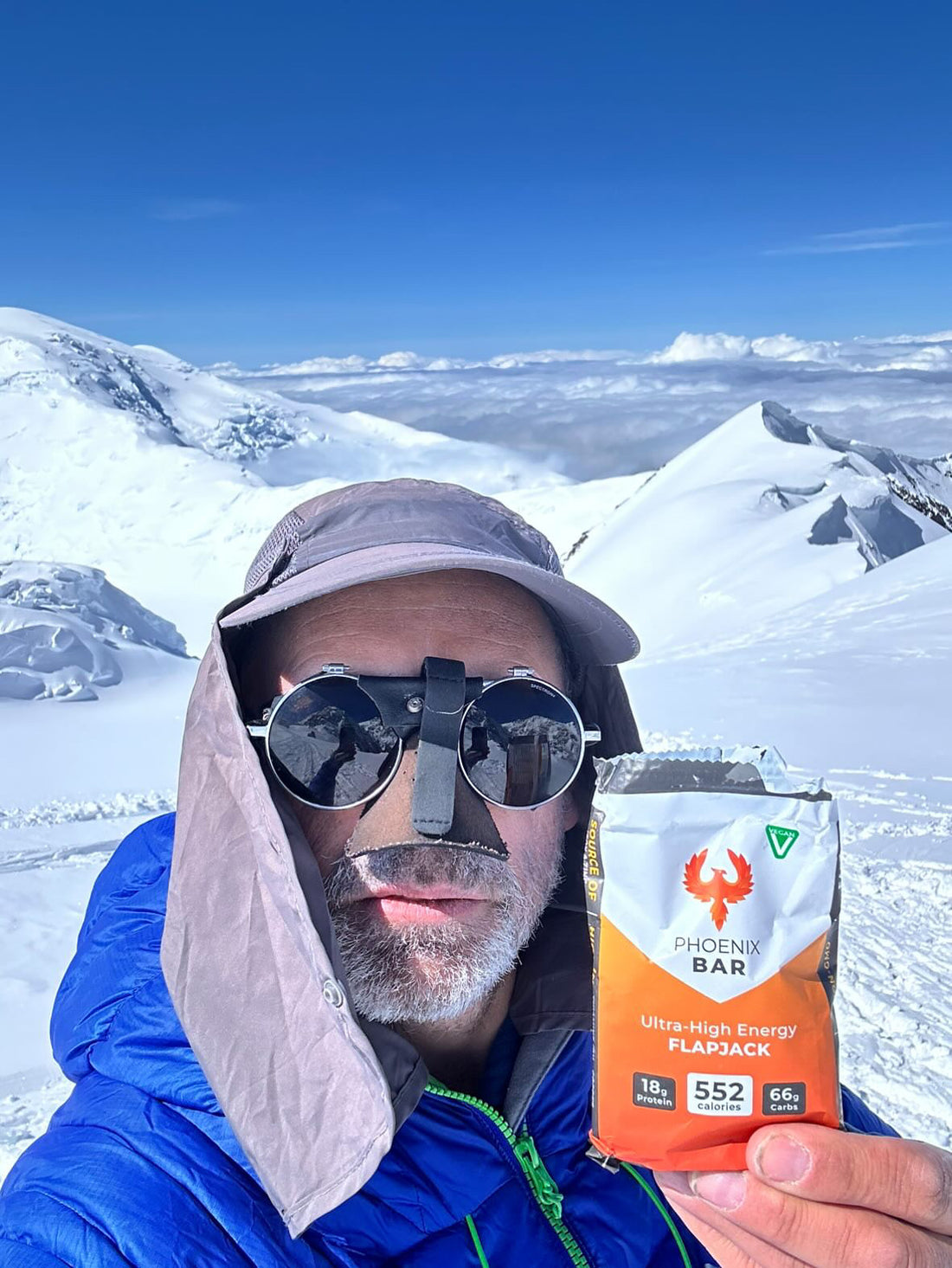
Plein de calories. Petit format.
Jusqu’à 557 calories dans une barre compacte et légère de seulement 120 g, avec jusqu’à 66 g de glucides et 19 g de protéines. Mangez-la entière, en morceaux sur quelques heures, ou mélangez-la à de l’eau chaude ou du lait chaud pour en faire un porridge.
Facile à manger, facile à digérer et pas trop sucrée. Des clients les ont mangées à -45 °C et dans la chaleur du Marathon des Sables, et elles se conservent jusqu’à deux ans : elles conviennent en montagne, pendant un travail de nuit ou à la maison, les jours où manger suffisamment est difficile.
- 557 calories dans seulement 120 g (529 à 557 selon la saveur)
- 4,6 calories par gramme
- 66g glucides par barre (jusqu’à)
- 19g protéines par barre (jusqu’à)
Soumettre une demande de rétractation
Veuillez remplir le formulaire suivant pour soumettre votre demande de rétractation.

