
Why Can't I Gain Weight? The Real Reasons, and How to Fix Them
If you can't gain weight, it usually comes down to one of a few things, and the most common by far is eating fewer calories than you think. The others are a fast metabolism or a high activity level, an appetite that fills you up before you have eaten enough, and simple day-to-day inconsistency. The fix is rarely eating huge amounts of food. It is getting more calories into less food, so a normal appetite goes further.
That last point is the one most advice misses. The single most useful thing I have learned working with people trying to gain weight is that most of them are not short on willpower or effort. They are hitting a wall of appetite. There is only so much food you can chew through in a day, and once you reach that limit, eating more is not the answer. Eating denser is. For the mechanism behind gaining weight, see how to eat in a calorie surplus.
You are probably eating less than you think
This is the number one reason, and it catches almost everyone. People who feel like they eat constantly are often surprised, when they actually track it, to find their weekly average sits right at maintenance.
It happens because a couple of big days get quietly cancelled out by lighter ones, a skipped meal here and there erases the extra, and the mind remembers the large meals and forgets the small ones. The only way to know for sure is to track honestly for a week or two. Almost every time, the gap appears. Work out where you actually stand with how many calories to gain weight.
Your metabolism is fast, or you are very active
Some people do burn through more than others. If you are naturally fidgety, on your feet all day, or training hard, your body is spending more than you realise, and the target you need to beat is higher than average.
This does not mean you cannot gain. It means your maintenance level is higher, so your surplus has to start from a bigger number. If you are active, add back the calories you burn on training days on top of your normal intake, rather than letting exercise quietly eat into your surplus. A fast metabolism raises the bar, it does not remove it.
You fill up fast, so you run out of appetite before calories
This is the wall most people hit, and it is the real reason a lot of people cannot gain. You sit down meaning to eat more, and you are full halfway through. Pushing past that with sheer volume is miserable and rarely lasts.
The answer is not to force more food down. It is to make the food you do eat carry more calories, so your appetite is no longer the limit. Fat is the tool, because it adds the most calories for the least bulk. A tablespoon of olive oil stirred into a meal is about 120 calories and takes up no room, and a shake can carry 500 calories in a glass that goes down easily when a plate will not. Choosing denser food is how a small appetite still adds up. For more on this, see easy ways to eat more calories and the foods to build on in calorie-dense foods.
You are not consistent enough
Weight gain is judged over weeks, not days. A brilliant week undone by a lazy weekend nets out to nothing, and a run of "good enough" days beats the occasional perfect one.
The people who gain are not the ones who eat enormous meals now and then. They are the ones who reliably eat a bit more than they burn, most days, for long enough to matter. If your intake swings wildly, steadying it is often all that is needed.
Body type: are you an ectomorph?
You may have a naturally lighter frame, what the gym world calls an ectomorph, with a thinner build and less natural muscle and fat. If that is you, gaining is genuinely harder, because your body seems keen to stay where it is.
It is harder, not impossible. The rules do not change, you just have to apply them more deliberately: a steady surplus, denser food to get around a smaller appetite, and patience. If your goal is muscle rather than just weight, pair it with resistance training, which is covered from the gym angle in bulking.

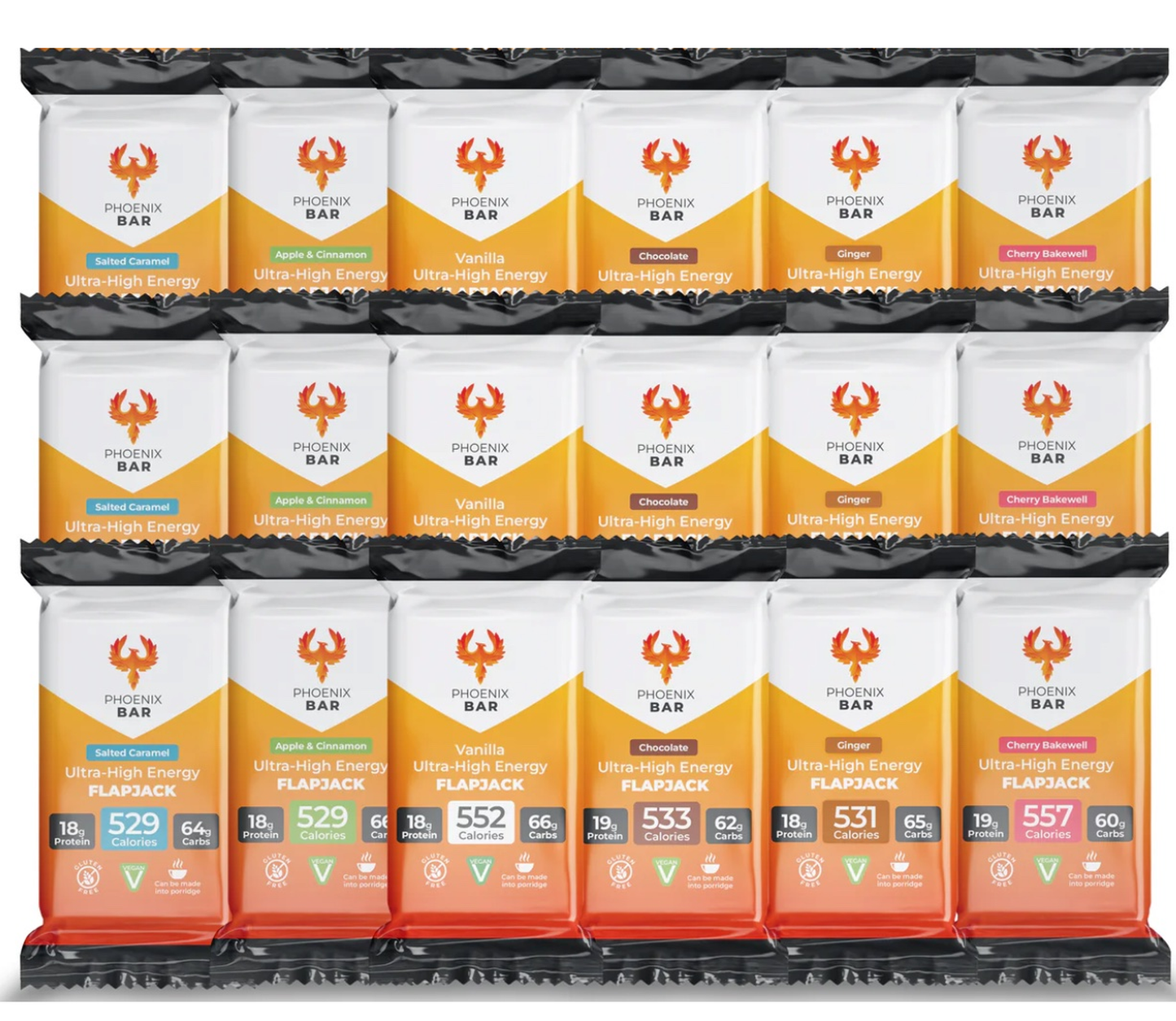
Phoenix Bars: Up to 557 Calories Per Bar
Highly compact, low-volume, calorie-dense bars. Soft, easy to eat whole or as a warm porridge. Vegan, gluten-free and contain up to 66g of carbohydrates, 19g of protein & 8 vitamins & minerals.
How to actually fix it
Whichever reason fits you, the sequence is the same. Find your real intake by tracking for a week or two, work out the number you need to beat, then add a steady surplus on top. Make that surplus easy to hit by leaning on dense food and drinks rather than sheer volume, so your appetite stops being the ceiling. Then give it a few weeks and adjust based on the scales.
The practical hard part is getting the extra calories in on the days your appetite is low, which is exactly the problem the product was built for. Each of our high calorie bars is up to 557 calories in a 120g bar, a lot of calories in a small, easy-to-eat form, with no preparation. It is vegan and gluten-free, and can be stirred into hot milk to make porridge if that is easier to get down. It is a simple way to add a known amount of calories on the days a meal is too much. You can see the full range of high calorie bars on the homepage.
Frequently asked questions
Why can't I gain weight even though I eat a lot?
Almost always because your weekly average is lower than it feels. Big days get offset by lighter ones and skipped meals, so your intake lands near maintenance. Track honestly for a week or two and the gap usually shows. The fix is eating a bit more than you burn, consistently.
Is my metabolism why I can't gain weight?
It can be part of it. A fast metabolism or a very active lifestyle raises the number of calories you need, so your target is higher than average. It makes gaining harder rather than impossible. Start your surplus from a higher maintenance figure and add back calories burned through exercise.
Why do I fill up so fast when trying to eat more?
Because volume, not calories, is your limit. A small appetite fills before you have eaten enough plain food. Rather than forcing more down, switch to denser food and drinks that carry more calories in less space, so you reach your target without needing to eat a larger amount.
Can ectomorphs gain weight?
Yes. A lighter, thinner frame makes gaining harder because the body resists change, but the same approach works: a steady calorie surplus, denser food to get around a smaller appetite, consistency over weeks, and resistance training if the goal is muscle. It takes more deliberate effort, not different rules.
How long before I see weight gain?
Give any change a few weeks before judging it, and look at the trend on the scales rather than a single day, since weight bounces around daily. If nothing has moved after two to three weeks, you are most likely not yet in a surplus and can add more calories and reassess.
Related guides
For the number to aim for, see how many calories to gain weight. For the mechanism, see how to eat in a calorie surplus. For the practical side, see easy ways to eat more calories and how to gain weight. For the porridge method, see how to use Phoenix Bars.
Written by James Frost, Founder of Flaming Phoenix. James started Flaming Phoenix in 2024 and has spent the years since working out how to get the most calories into the least food, building and testing compact, calorie-dense recipes. He can be reached at jfrost@flaming-phoenix.co.uk. Last reviewed: June 2026.


Flaming Phoenix



Contact Us
Soumettre une demande de rétractation
Veuillez remplir le formulaire suivant pour soumettre votre demande de rétractation.

