
Fieldwork Nutrition for Geologists and Field Scientists
The short version: fieldwork nutrition is shaped by the fact that it is work, not recreation. You are chasing daylight, a survey window or a tide, your pack gets heavier as samples and kit go in, and once you leave camp you usually cannot heat or prepare anything until you are back. So the practical priorities are food that is compact and low in bulk, so it does not fight your samples and equipment for space, needs no preparation, survives a field bag, and can be eaten one-handed while you keep working. Hard fieldwork in the cold is genuinely demanding, with planning guidance for geoscientists putting it around 3,500 to 4,000 calories a day, and under-fuelling shows up not just as tiredness but as sloppier observation and weaker data. This guide covers how to eat well across a field day, in different environments, and over a long field season.
About this guide
I am James Frost, founder of Flaming Phoenix. We make Phoenix Bars, a 120g vegan, gluten-free bar that packs a lot of easily digested energy into a small, low-volume package, and which can be made into a warm porridge with hot water. I am not a field scientist, so where this gets specific I draw on published fieldwork guidance from geoscientists and on the wider principles of expedition nutrition. This page is one part of our wider ultra-endurance and expedition nutrition guide. Last reviewed June 2026.
Key points
- Fieldwork is work: you fuel around daylight, survey windows and data, not your own schedule, and you often cannot heat or buy food once you leave camp.
- Hard fieldwork in the cold is demanding, with geoscience planning guidance putting it around 3,500 to 4,000 calories a day for men and 3,000 for women, more for arduous work, with extra as contingency.
- Compact, low-bulk food matters because your pack is already full of equipment and only gets heavier as samples go in.
- Under-fuelling hurts more than energy: tired field scientists make sloppier observations and record poorer data.
- On cold field mornings a substantial breakfast such as porridge is the field standard, and on hot days grazing on snacks beats a whole meal.
- Over a long field season, variety and morale matter, because boxed rations get boring fast.
Contents
- The field scientist's nutrition problem
- How much fieldwork demands
- The field day, and why you cannot always stop to eat
- Fieldwork by environment
- Field camps, long seasons and morale
- What to keep in your field bag
- Where Phoenix Bars fit
- Frequently asked questions
1. The field scientist's nutrition problem
Fieldwork eating is governed by the work, not by your appetite or the clock. You go when the light, the tide, the weather window or the outcrop allows, and you keep going while the conditions hold, which often means the meal you planned gets pushed or skipped. Anyone who has tried to finish a mapping traverse before the cloud comes down knows the feeling.
Two constraints make it different from a recreational walk. First, you are already carrying a full load of equipment, and for geologists that load grows through the day as samples go into the bag, so every spare litre of space and gram of weight is contested. Bulky food loses that contest. Second, once you have left camp or the vehicle, you generally cannot heat or prepare anything, so you eat what you carried, cold, in whatever break the work allows.
The result is that field scientists routinely under-eat during the working day, then arrive back ravenous. That matters beyond comfort, because the early signs of under-fuelling are exactly the things fieldwork depends on: concentration, careful observation and accurate recording. Fixing it is mostly about carrying the right kind of food, which is what the rest of this guide covers.
2. How much fieldwork demands
Fieldwork sits at the demanding end of working life, especially in the cold. Planning guidance written for geoscientists heading into polar and remote regions puts hard fieldwork in the cold at roughly 3,500 to 4,000 calories a day for men and around 3,000 for women, less in warm or easy conditions and more for particularly arduous work, with extra built in as contingency.
Three things drive that. There is the walking and load-carrying itself, often over rough ground with a pack of kit and accumulating samples. There is the cold, which raises your energy use simply to keep your core temperature up, and which can be severe in polar, mountain and winter fieldwork. And there is the duration, with field days frequently running from first light to last.
The transport of food is its own constraint that shapes what you can eat. Rations into remote field sites may have to be shipped months ahead, flown in by helicopter, or carried in by hand, so weight and bulk are limiting factors, which is exactly why compact, calorie-dense food is prized in the field. The broader logic of getting maximum energy from minimum weight is covered in our calorie-dense foods guide and backpacking nutrition guide.
3. The field day, and why you cannot always stop to eat
The defining feature of a field day is that you cannot eat on a tidy schedule. The work sets the rhythm, and the good data often comes in exactly the window when you least want to stop. So the realistic approach is to graze rather than rely on a single sit-down lunch that may never happen.
This is helped enormously by food you can eat one-handed, without unpacking, while you keep working or walking between sites. Your hands are usually busy with a hammer, a hand lens, a notebook, a GPS or sampling kit, often in gloves, so anything fiddly tends not to get eaten.
Conditions push the same way. In heat, most people find it hard to face a whole meal, so a series of small snacks through the day works far better than one big stop, and shelf-stable food that will not spoil out of a fridge across an eight-hour day is essential. In cold, the priority flips toward getting substantial fuel in at every chance and protecting your concentration, because a cold, depleted field scientist makes mistakes. Either way, the food has to come to the work, not the other way round.
4. Fieldwork by environment
Field science happens in the same extreme places your recreational counterparts go, but as a job, so the environment shapes what you carry. Each of these has a detailed setting guide worth reading alongside this one.
Cold and polar fieldwork is the most demanding for fuelling. Energy needs are high, daytime snacks have to be accessed and eaten quickly in the cold wearing thick gloves, and a substantial hot breakfast sets you up for the day, with instant porridge the long-standing field standard. Our polar expedition nutrition guide and high altitude mountaineering guide cover the cold and altitude end in depth.
Hot and desert fieldwork flips the problem: appetite drops, whole meals feel impossible, and food must survive heat without spoiling or melting, so grazing on dense, stable snacks and staying on top of hydration matters most. Mountain and high-altitude fieldwork combines cold, load-carrying and the appetite suppression that comes with altitude, where small, calorie-dense, easy-to-digest food is far easier to get down than a big meal.
Jungle, forest and remote fieldwork brings humidity, spoilage and long days far from resupply, which our jungle expeditions guide and wild camping food guide address. And for the geologists working underground, the cold, cramped, hands-busy conditions are their own challenge, covered in our caving nutrition guide.
5. Field camps, long seasons and morale
Beyond the single field day, many scientists live in remote camps or stations for weeks at a time, and here food becomes a logistics and morale question as much as a fuelling one.
At a staffed station or established camp you are usually fed reasonably well, but deep-field ration boxes are a different story. Polar field scientists describe daily ration boxes built around roughly 3,500 calories of mostly dehydrated, add-water food plus biscuits and chocolate, which is functional but, in their own words, boring. Over a long season that monotony genuinely wears people down, and field crews consistently note that a bit of variety and a treat can lift the whole team's mood.
That is the case for carrying a few things that break the monotony and double as reliable fuel. A substantial, familiar breakfast before a cold day out is one of the highest-value habits in the field, and porridge is the classic choice, which our high calorie porridge guide and how to use Phoenix Bars guide both cover. The aim across a long season is steady energy, a bit of pleasure, and food that does not all taste the same by week three.
6. What to keep in your field bag
For the working day, the food that earns a place in a field bag follows a tight brief. It has to be compact and low in bulk, so it does not compete with your equipment and samples for space. It has to need no preparation, because you cannot cook once you have left. It has to survive being knocked around in a bag with rock hammers and sample bags. And it has to be eatable one-handed, often in gloves.
The reliable options are the dense, durable, shelf-stable ones: nuts and trail mix, dried fruit, oatcakes, flapjack, hard cheese and compact bars all qualify. Chocolate works in the cold but melts in heat, so it is less reliable in desert or summer fieldwork. Our high calorie snacks guide and hiking and trekking guide go deeper on the trade-offs.
The principle is to carry little but choose dense, then eat properly back at camp or the vehicle. A breakfast option for cold starts, a handful of grazing snacks for the working day, and a small reserve for the day that runs long is usually all you need on your person.
7. Where Phoenix Bars fit
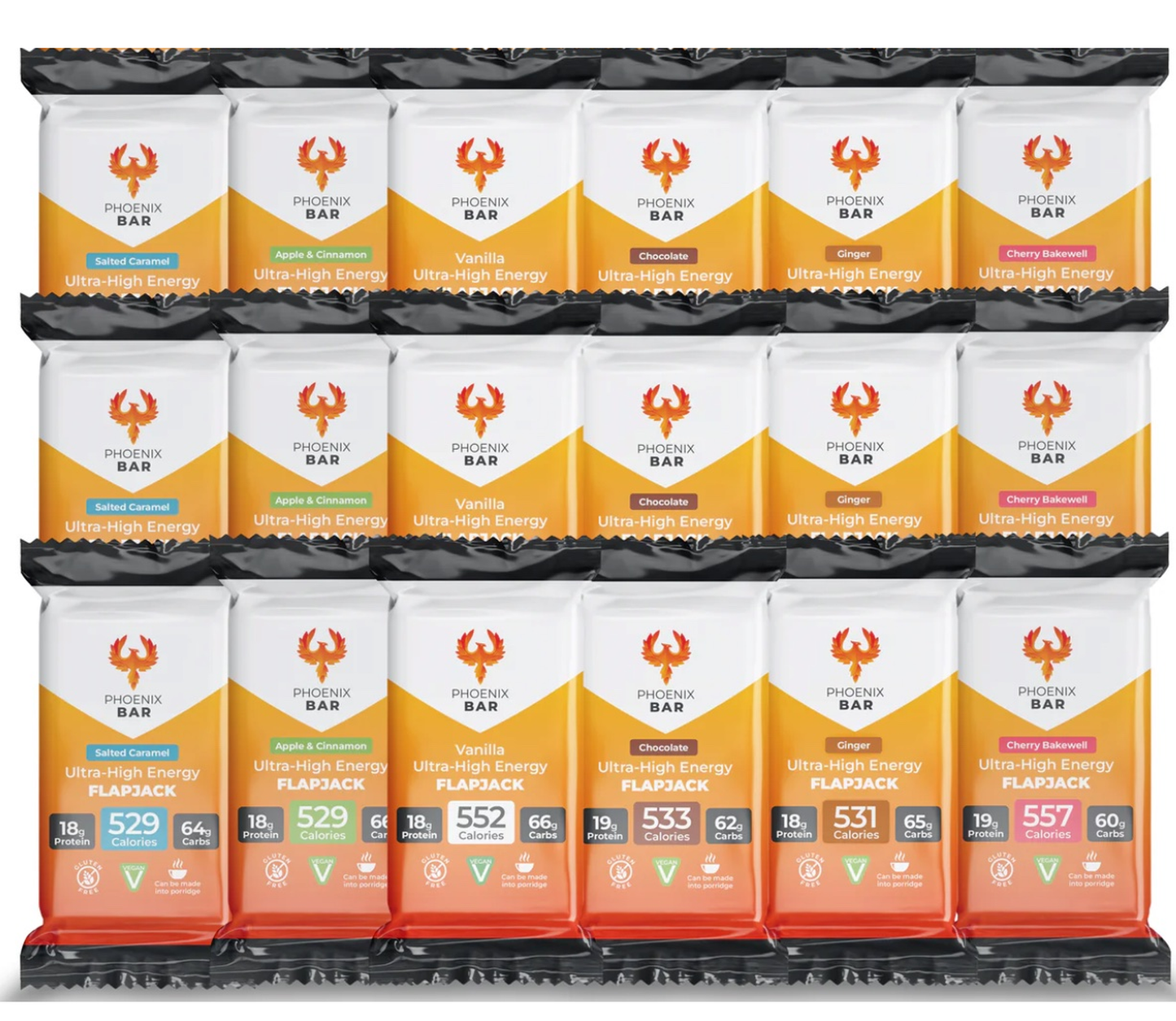
This is a use case our bars were effectively built for, so the case is straightforward and the fit is honest. A Phoenix Bardelivers up to 557 calories in a 120g package the size of a phone, which is exactly the compact, low-bulk fuel that does not fight your samples and kit for space, unlike a bag of bulkier snacks.
It needs no preparation, survives a field bag, and can be eaten one-handed in gloves between sites, which suits the no-stop reality of a field day. On a cold field morning it can be made into a warm porridge with hot water from a flask or stove, matching the breakfast that field scientists already rely on. And because it is vegan and gluten-free, it works as one reliable option across a mixed field team and in remote camps where catering for dietary needs is harder. Over a long season the six flavours, Apple and Cinnamon, Cherry Bakewell, Chocolate, Vanilla, Salted Caramel and Ginger, help with the monotony that boxed rations bring.
The honest limits: at a staffed station or a well-supplied camp you are fed well, so these are for the working day, the gaps and the cold breakfast, not a replacement for a proper camp dinner. At £5.25 a bar they are a premium product, and what you are paying for is the calorie density, the low bulk, the no-prep convenience and the warm option. A practical way to take them is the starter bundle of 12 bars for a short field trip, or the essential and complete bundles to stock a field bag for a longer season. You can see the range in the Phoenix Bars collection and the bundles collection.
8. Frequently asked questions
What do geologists eat in the field?
On the working day, geologists tend to eat compact, no-prep, shelf-stable food they can manage one-handed: trail mix, nuts, dried fruit, oatcakes, flapjack, cheese and bars, eaten in short breaks between sites. Bulky food is avoided because the pack is already full of equipment and gets heavier as rock samples go in.
How many calories do you need for fieldwork?
It varies with conditions, but planning guidance for geoscientists puts hard fieldwork in the cold at around 3,500 to 4,000 calories a day for men and about 3,000 for women, with more for particularly arduous work and less in warm or easy conditions. Cold and load-carrying are the main drivers of the higher figures.
What food should you take on remote fieldwork?
Take compact, calorie-dense, shelf-stable food that needs no preparation, survives a bag, and will not spoil out of a fridge across a long day. Weight and bulk matter because remote rations are often flown or carried in, so concentrated energy is worth far more than bulky snacks.
What is a good breakfast before a cold day of fieldwork?
A substantial breakfast is important before a cold day out, and porridge is the long-standing field standard, with sugar, jam, dried fruit or cinnamon to keep you going through the morning. A warm, carbohydrate-rich start protects both your energy and your concentration in the cold.
How do you eat on fieldwork in hot weather?
In heat, most people struggle to face a whole meal, so grazing on small, dense snacks through the day works better than one big lunch, alongside steady hydration. Choose food that will not spoil or melt out of a fridge across the working day.
Are there vegan or gluten-free options for field camps?
Larger stations usually cater for dietary needs, but small camps and remote fieldwork can be limited, so carrying a reliable vegan or gluten-free option takes the uncertainty out of it. A vegan, gluten-free bar is a simple way to keep one thing that works for everyone on a mixed field team.
Related guides
Closest companions: our polar expedition nutrition and high altitude mountaineering guides for cold and altitude fieldwork, our jungle expeditions and wild camping food guides for remote and humid settings, and our caving nutrition guide for working underground. For getting the most energy from the least weight, see our calorie-dense foods, high calorie snacks and backpacking nutrition guides. This page sits within our wider ultra-endurance and expedition nutrition guide.

Phoenix Bars: Up to 557 Calories Per Bar
Soft, easy to eat whole or as a warm porridge. Low volume, two-year shelf life.
When Compact Foods Can Help
Preparing full meals is not always realistic for older adults, particularly on days when energy is low or when eating alone reduces motivation to cook.
In these situations, compact foods can help bridge gaps in calorie intake.
Some people prefer foods that can be eaten gradually throughout the day rather than sitting down for a formal meal. Others prefer snacks that require no preparation and can be eaten whenever appetite briefly returns.
Foods that provide substantial calories in small portions can be particularly useful in these situations — not as a replacement for meals, but as a practical way to increase total calorie intake when meals alone aren't enough.
How Phoenix Bars Can Be Used When Appetite Is Low
Phoenix Bars were originally developed for extreme endurance athletes and expedition teams who need maximum calories in minimum weight and volume. The same qualities that make them effective in those environments make them practical for older adults managing low appetite.
Each bar delivers up to 557 calories, 66g of carbohydrates, and 19g of protein. They are soft in texture, easy to chew, and can be broken into smaller pieces to eat gradually throughout the day. They are not sickly sweet, which matters when appetite is already fragile.
Critically, Phoenix Bars can be mixed with hot water or milk to make a warm, nutritious porridge. For older adults who find solid food difficult — whether due to dental issues, fatigue, or simply not feeling hungry — the porridge format delivers the same calories in a form that can feel much easier to manage. For more on this, see how people use Phoenix Bars in practice.
Phoenix Bars are vegan, gluten-free, and made from natural ingredients including oats, coconut oil, and plant-based protein. They have a two-year shelf life, so they can be kept in a cupboard and used whenever needed — there is no urgency to consume them quickly.
Because each full bar contains over 550 calories, even eating half a bar provides more calories than many typical snacks or light meals.
Practical Suggestions for Daily Use
Morning: Half a bar mixed into porridge at breakfast adds approximately 275 calories to the morning meal without significantly changing the portion size.
Afternoon: A whole bar broken into small pieces and eaten gradually across the afternoon provides a steady calorie intake without requiring a formal meal.
Evening: A bar made into a warm porridge in the evening provides a comforting, easy-to-eat option on days when cooking a full dinner is not realistic.
Throughout the day: Keeping a bar broken into chunks in a small container nearby means calories are always within reach when appetite briefly returns.
For Family Members and Carers
If you are reading this on behalf of a parent, grandparent, or someone you care for, Phoenix Bars can be a simple addition to their routine. They do not require cooking, they are soft enough to eat without difficulty, and they store for up to two years in a cupboard.
Many of our customers order on behalf of a family member. You can set up a recurring subscription so the bars arrive automatically on a schedule — one less thing for anyone to think about or manage.
If you are unsure whether Phoenix Bars would be suitable for your relative's situation, feel free to contact me directly. I am always happy to talk it through.
Frequently Asked Questions
Why do older adults lose appetite?
Appetite naturally declines with age due to weaker hunger signals, medication side effects, dental difficulties, reduced mobility, and changes in taste and smell. Chronic conditions and eating alone can also contribute.
What foods are best for elderly people with low appetite?
Foods that are calorie-dense, soft, easy to prepare, and not overwhelming in portion size are often the most practical. Options include nut butters, full-fat dairy, avocados, and compact high-calorie foods like Phoenix Bars.
How can you help an elderly person gain weight?
Focusing on calorie-dense foods in smaller, more frequent portions is generally more effective than trying to increase meal sizes. Adding calorie-rich ingredients to existing meals and keeping ready-to-eat snacks nearby can also help.
Can Phoenix Bars be made into porridge?
Yes. Adding hot water or milk to a Phoenix Bar creates a warm, soft porridge with up to 557 calories. This can be easier to eat for people who find solid food difficult to manage.
How many calories does an older adult need?
Individual needs vary depending on weight, activity level, and health conditions. As a general guide, most older adults need at least 1,600–2,000 calories per day. If unintentional weight loss is occurring, calorie intake may need to be higher. A doctor or dietitian can provide personalised guidance.
How People Use Phoenix Bars When Eating Feels Difficult
"The Phoenix Bar I purchased was absolutely lovely and digested so easily. It gave me a lot of energy on a day where I was very tired."
"I made it into a porridge — easy to crumble, very tasty and filling. I did use milk but will try it with water next time around."
Related Guides
You may also find these guides helpful:
- Low Appetite & Difficulty Eating Enough Calories — understanding why appetite drops and what helps
- Calorie-Dense Foods: What They Are and When They Help — a full overview of calorie density
- How To Use Phoenix Bars — practical guidance including the porridge method
If you have any questions about using Phoenix Bars for an elderly relative or someone with low appetite, contact me directly - I am always happy to help.
James Frost
Founder, Flaming Phoenix
07990 519422


Flaming Phoenix



Contact Us
Soumettre une demande de rétractation
Veuillez remplir le formulaire suivant pour soumettre votre demande de rétractation.

