

How to Gain Weight With a Fast Metabolism
Dans ce guide

 Written by James Frost, founder of Flaming Phoenix. Updated October 2026.
Quick answer: To gain weight with a fast metabolism, eat about 500 calories a day above your maintenance, the top of the NHS's 300 to 500 range. If the scale hasn't moved after three weeks, add another 200 to 300. Use dense food and drinks so the extra fits a quick-to-fill appetite, and lift weights at least twice a week.
Before I launched Phoenix Bars I had around 150 conversations with endurance athletes, expedition people and people who struggle to eat enough. This page is for one particular version of that problem: you eat what feels like plenty, and the scale still does not move. For the general method, start with my guide to how to gain weight; this page covers what changes when your body burns through food faster than most.
What does a fast metabolism actually mean?
A fast or high metabolism means your maintenance is higher than average for your size: you burn more at rest, move more without noticing, or both. The differences between people are real, and they are partly inherited.
The clearest evidence comes from overfeeding studies. In a 1990 study in the New England Journal of Medicine, Claude Bouchard's team overfed 12 pairs of identical twins by 1,000 calories a day, six days a week, over 100 days, which came to 84,000 extra calories each. The average gain was 8.1kg, but individuals ranged from 4.3kg to 13.3kg, and twins tended to respond like each other, which points to genes.
Work that through. At the usual 7,700 calories a kilo, 84,000 extra calories should add about 10.9kg. The man who gained least put on 4.3kg, roughly 19,500 calories for every kilo.
A 1999 study in Science by James Levine at the Mayo Clinic shows where some of those calories go. Sixteen non-obese volunteers ate 1,000 calories a day over their needs for eight weeks. Two-thirds of the rise in what they burned came from non-exercise activity, the fidgeting, posture and general moving about of daily life, and differences in it explained a tenfold spread in how much fat people stored.
So if you eat what looks like a lot and stay the same weight, you may well be right about your body. Some people respond to extra food by moving more and storing less. That does not make gaining impossible. It means your number is higher than the standard advice assumes, and the extra has to be bigger and steadier than feels natural.
One more thing. If your weight has dropped without you changing anything, or your appetite or energy has changed suddenly, see your GP before trying to out-eat it. A lifelong "I've always been skinny" pattern is a different thing from a recent change.
How many calories do you need with a fast metabolism?
Start at your estimated maintenance plus 500 calories a day, then let the scale tell you whether your burn is higher than the equation thinks. Calculators assume an average body, and yours may not be one.
A worked example: a 22-year-old man, 183cm and 63kg, who trains four times a week. The weight gain calculator puts his maintenance at about 2,600 calories, so he starts at 3,100. If his weekly weigh-ins are still flat after three weeks, his real maintenance is higher than estimated. Adding 250 takes him to 3,350, and he holds that for another three weeks before judging again. A flat scale at the calculated number is what a higher-than-average burn looks like in practice, and it is fixable.
The other common reason for a flat scale is that the surplus is not really there. People trying to gain weight can believe they are eating loads while falling a few hundred calories short, because dense foods look small and bulky foods feel filling. Tracking for a week or two shows the real picture, and my guide to how many calories to gain weight explains how to measure your maintenance rather than guess it.
What to eat to gain weight with a fast metabolism
Eat foods that pack the most calories into the least volume, and add calories to meals rather than adding more food to the plate. Bulky staples are mostly water: cooked pasta is about 150 calories per 100g and boiled rice about 130, so eating more of them fills you up long before it closes a 500-calorie gap.
Compare those with the foods below. Figures are approximate, so check the label on what you buy.
- Olive or rapeseed oil: about 120 calories a tablespoon. Stir it into pasta, rice, soup or mash.
- Nuts: about 600 calories per 100g, so a 30g handful is around 180.
- Peanut butter: about 600 calories per 100g, or 90 a tablespoon on toast or in porridge.
- Cheddar: about 415 calories per 100g; 30g grated over a meal adds about 125.
- Granola: around 450 calories per 100g, so a 60g bowl with 200ml of whole milk is about 400.
- Dates and raisins: roughly 280 to 300 calories per 100g, with nothing to prepare.
- Whole milk: about 65 calories per 100ml, around 15 more than semi-skimmed for every 100ml you drink.
Our full guide to calorie-dense foods explains the principle, and high-calorie snacks ranks the easiest ones to eat between meals. A rich high-calorie breakfast is the simplest way to front-load the day.
How to gain weight with a fast metabolism and a small appetite
Spread the extra over five or six smaller eating occasions and drink some of it between meals, which is how the NHS suggests adding calories without facing bigger plates.
Three meals plus a snack mid-morning, mid-afternoon and before bed gives you six chances to eat, so at 3,100 calories no sitting has to carry much more than 500. Drinks are the other lever: blend 400ml of whole milk with two tablespoons of peanut butter and a banana and you have about 540 calories in one glass. Have it between meals rather than with them, so it does not take the room you need for food. Our homemade weight gainer shakes and high-calorie drinks guides have more recipes, and why do I get full so fast covers the fullness side.
Should you lift weights if you have a fast metabolism?
Yes. Strength training at least twice a week, the NHS guideline for all adults, steers more of the weight you gain towards muscle rather than fat, and the NHS notes that exercise can also improve appetite.
Compound lifts such as squats, deadlifts, rows and presses work several muscle groups at once and give the most return for the time. Long steady cardio works against you here, because it burns the calories you are trying to bank, so if gaining is the goal, keep it modest and put the effort into lifting. Sleep matters too, because muscle is built during recovery, not during the session. If lifting is your main focus, the hardgainers guide sets out a training-led plan and the bulking calculator sets your surplus around it.
Where Phoenix Bars fit
The hardest part of gaining with a fast metabolism is hitting a high number every day, especially between meals and on busy days. Phoenix Bars are one way to close that gap: up to 557 calories and up to 19g of protein in a compact, soft 120g bar, so they add a lot without the volume of a meal. They are vegan and gluten-free, can be eaten whole or in pieces, and can be stirred into water or milk as a quick high-calorie porridge. You can see all six flavours on our high calorie bars for weight gain page, or go straight to Phoenix Bars.
Frequently asked questions
Is it harder to gain weight with a fast or high metabolism?
Harder, yes; impossible, no. A fast metabolism means a higher maintenance figure, so the same extra food produces less gain. In one twin overfeeding study, men eating the same 84,000 extra calories gained anything from 4.3kg to 13.3kg. The fix is a bigger, steadier surplus: start at 500 calories a day and adjust from there.
Why can't I gain weight even though I eat a lot?
Usually because the surplus is smaller than it feels. People with a fast metabolism burn more than average and tend to overestimate how much they are eating, so "a lot" can still fall short of what their body needs. Tracking for a week usually shows the gap, and denser food, more frequent eating and consistency close it.
Can you gain weight with a fast metabolism without working out?
Yes. The surplus, not the gym, is what moves the scale, so eating 500 calories over maintenance will add weight with or without training. Without strength work, though, more of that weight will be fat. Two short sessions a week of squats, press-ups and lunges at home help more of it become muscle.
Is it harder to gain muscle with a fast metabolism?
It can feel harder, because you have to eat more than average just to hold your weight, let alone build. The principle is the same for everyone: a consistent surplus plus strength training. The main adjustment for a fast metabolism is simply eating more, more consistently, and using calorie-dense foods and shakes to make that achievable.
Can people with a fast metabolism get fat?
Yes. A fast metabolism raises the number of calories you need; it does not make you immune to a surplus. In the same twin study, even the man who gained least put on 4.3kg from 84,000 extra calories. If intake rises or activity drops for long enough, anyone gains weight, and some of it will be fat.
Sources: NHS, Healthy ways to gain weight; NHS, Physical activity guidelines for adults aged 19 to 64; Bouchard and others, The response to long-term overfeeding in identical twins, New England Journal of Medicine, 1990; Levine and others, Role of nonexercise activity thermogenesis in resistance to fat gain in humans, Science, 1999.
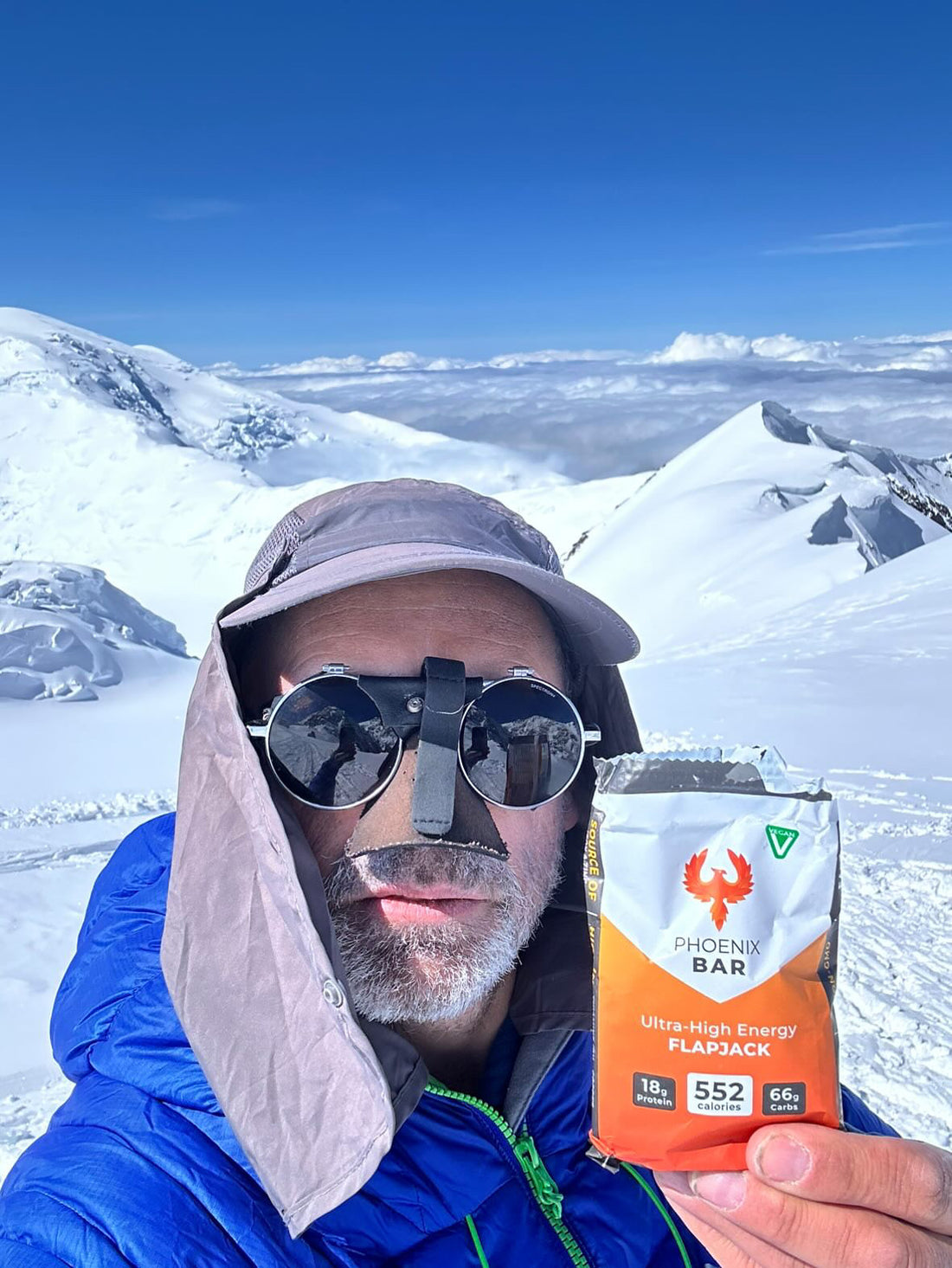
Plein de calories. Petit format.
Jusqu’à 557 calories dans une barre compacte et légère de seulement 120 g, avec jusqu’à 66 g de glucides et 19 g de protéines. Mangez-la entière, en morceaux sur quelques heures, ou mélangez-la à de l’eau ou du lait pour en faire un porridge.
Facile à manger, facile à digérer et pas trop sucrée. Des clients les ont mangées à -45 °C et dans la chaleur du Marathon des Sables, et elles se conservent jusqu’à deux ans : elles conviennent en montagne, pendant un travail de nuit ou à la maison, les jours où manger suffisamment est difficile.
- 557 calories dans seulement 120 g (529 à 557 selon la saveur)
- 4,6 calories par gramme
- 66g glucides par barre (jusqu’à)
- 19g protéines par barre (jusqu’à)
Soumettre une demande de rétractation
Veuillez remplir le formulaire suivant pour soumettre votre demande de rétractation.

