
Gravel Racing Nutrition: How to Fuel Long Gravel Races and Self-Supported Events
Written by James, founder of Flaming Phoenix. Last updated June 2026.
To fuel a long gravel race, aim for roughly 90 to 120 grams of carbohydrate per hour, eat a little every 30 to 45 minutes to protect your gut, and carry enough compact, calorie-dense food to cover the long gaps between aid. Mix drink and gels with real, easy-to-digest food so you can keep eating for hours without flavour fatigue or a wrecked stomach. On gravel, the rider who keeps eating is the rider who finishes well.
Gravel is its own fuelling problem, and most cycling nutrition advice is written for the road, where you can sit up, ride no-handed, and grab a feed at a smooth moment. Gravel does not give you those moments. The ground is rough, the routes are remote, the days are long, and the biggest events expect you to be largely self-supported. This guide is for anyone tackling a long gravel race or ultra-distance event, from a first Dirty Reiver or Gralloch to Unbound 200 or a self-supported monster like GBDURO, and it comes from years of helping riders fuel exactly these kinds of efforts.
Why is fuelling a gravel race harder than fuelling a road ride?
Three things make gravel harder. The terrain is too rough to take both hands off the bars or look down to fish a wrapper out of a pocket, so eating itself becomes a skill. The routes are remote, with aid often hours apart, so you cannot rely on grabbing food when you need it. And the days are long, frequently six to twenty hours, which turns the ride into a nutrition problem as much as a fitness one.
At Unbound, for example, aid stations sit roughly 50 miles apart, so riders have to leave each one carrying enough fuel and water for three to four hours. The hardest self-supported events have no neutral support at all, which means everything you eat, you carry. That is a very different challenge from a sportive with a feed zone every 30 miles. The Gravel Riders
How many carbs and calories do you need on the bike?
For long gravel events, most experts now recommend somewhere between 90 and 120 grams of carbohydrate per hour, with the exact figure depending on your size and fitness. The reason is simple: your body holds only about 90 minutes of glycogen, and once that runs out without external fuel, performance drops off sharply. That collapse is the bonk, and on gravel it usually arrives miles from anywhere. OBED BikesEndurance kollective
Carbohydrate per hour is the headline number, but on a long gravel day total calories matter just as much. A ten-hour effort can burn well over 6,000 calories, and you simply cannot replace all of that with gels and drink mix without your gut rebelling. This is why calorie-dense real food earns its place in the back half of a long race. Our guide to ultra-high-carb solid foods goes deeper into getting carbs from food you can actually face after six hours.
The four problems that wreck gravel fuelling, and how to beat each one
Gut distress. Eating large amounts in one go on rough ground is a recipe for stomach trouble. The fix is to eat small and often, roughly something every 30 to 45 minutes to stay topped up while keeping each portion small enough not to upset your gut, and to favour food that is easy to digest. Whatever you choose, practise it in training, because race day is the worst time to discover a food does not agree with you. OBED Bikes
Flavour fatigue. After six hours, another sweet gel can be physically hard to swallow. This is one of the most underrated reasons riders stop eating and then bonk. Varying texture and flavour, and breaking up the sweetness with real food, keeps you eating when it matters most.
Heat and mush. Many foods melt, sweat, or turn to paste in a jersey pocket on a hot day. Food that holds its shape and texture is far more likely to actually get eaten.
Eating one-handed. On technical gravel you need food you can open and eat without stopping, looking down, or taking both hands off the bars. The easier a food is to manage on the move, the more of it you will get in.
Liquid, gels and real food: getting the mix right
A sensible long-gravel strategy spreads your carbohydrate across drink, gels, and real food rather than leaning on any one of them. On rough terrain, getting a good share of your carbs from drink mix makes sense, because around half your hourly fuelling coming from liquid suits gravel, where you need to keep your hands and focus on bike handling. Gels are compact and fast, but they pile up flavour fatigue and gut load over a long day. The Feed
Real food does the opposite job. As experienced gravel racers put it, it is worth building solid food into your fuelling because it gives both your gut and your mind a break from sweet liquids and gels. If you are trying to move away from a gels-only approach, our energy gel alternatives guide covers the real-food options that work without slowing you down. Carbs Fuel
What real food actually works on gravel
Good gravel food meets five tests. It is calorie-dense, so a small piece carries real fuel. It is easy to eat one-handed on rough ground. It is easy to digest. It holds up in heat without melting. And it tastes good enough to face deep into a long day.
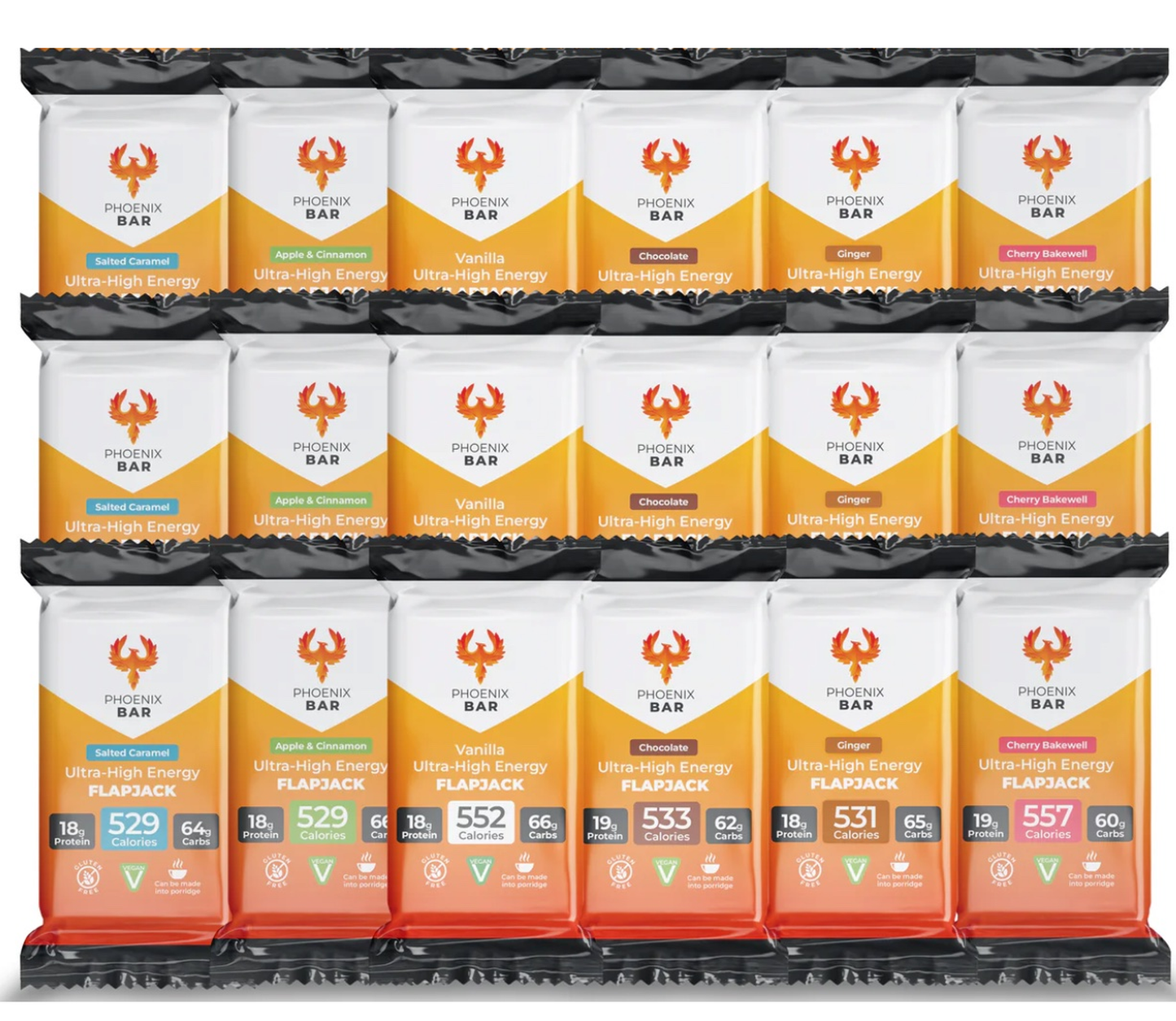
This is the brief our Phoenix Bars were built to. Each 120g bar is calorie-dense real food rather than a gel, so it gives you a genuine block of fuel and a welcome break from sweetness, and it is easy to digest, which is the whole point on gravel. There are six flavours, Apple and Cinnamon, Cherry Bakewell, Chocolate, Vanilla, Salted Caramel and Ginger, which is exactly what you want against flavour fatigue when you still have three hours to go. They are vegan and gluten-free, they do not need refrigeration, and on a multi-day effort a bar can be softened with a little water into a quick porridge at camp. You can see how riders use them across long events on our how to use Phoenix Bars page, and read hundreds of verified reviews from endurance riders and racers.
As with any fuel, test them on your long training rides before you race.

Phoenix Bars: Up to 557 Calories Per Bar
Soft, easy to eat whole or as a warm porridge. Low volume, two-year shelf life.
Fuelling the big self-supported gravel events
The longer and more remote the event, the more this becomes a logistics problem. On self-supported races you carry everything, and even on supported ones you need to start with enough food in your pockets for at least three hours, often more, and carry extra in case a bottle ejects or you have a mechanical. Riders who do this well think in sections: they leave every aid station or drop bag with enough compact fuel to reach the next one, with a margin on top. Source Endurance
This is exactly where calorie-dense food pays off. The more calories you can carry per gram and per pocket, the less you have to stop, and the bigger your safety margin if the ride goes long. For multi-day, fully self-supported gravel, the same thinking that drives our bikepacking nutrition guide applies, just compressed into a faster, harder effort.
A simple fuelling plan for a long gravel race
Two to three days before. Start gently raising your carbohydrate intake, leaning on lower-fibre, high-carb foods like rice, pasta, oats and bread, with extra sodium and good hydration. Carbs Fuel
Race morning. A familiar, easy-to-digest high-carb breakfast a few hours before the start. Nothing new.
The first hour. Start eating early, before you feel you need to. It is far easier to stay topped up than to claw back a deficit later.
The long middle. Settle into your target of 90 to 120 grams of carbohydrate per hour, taking a little every 30 to 45 minutes, split across drink, gels and real food.
The back half. This is where gels lose their appeal and riders quietly stop eating. Shift more of your fuelling to real food and variety to keep yourself eating all the way to the line.
After the finish. Get some carbohydrate and protein in quickly, ideally around 40 to 60 grams of carbohydrate and 20 to 30 grams of protein within the first half hour, then a proper meal within a couple of hours. The Gravel Riders
Frequently asked questions
How many carbs per hour do you need for a gravel race?
For long gravel events, most experienced riders target roughly 90 to 120 grams of carbohydrate per hour, adjusted for your size and how well your gut is trained. Build up to it gradually in training rather than trying it for the first time on race day.
What should I eat during a long gravel ride?
A mix of drink mix, gels, and calorie-dense real food works best, eaten in small amounts every 30 to 45 minutes. Real food like a Phoenix Bar becomes more important in the second half, when sweet gels get hard to face.
How do I stop bonking in a gravel race?
Eat early and keep eating. Because your body only holds around 90 minutes of glycogen, the way to avoid the bonk is to take in carbohydrate steadily from the first hour rather than waiting until you feel low.
How do I avoid stomach problems on gravel?
Keep portions small and frequent, favour easy-to-digest food, get a good share of your carbs from drink, and practise your exact race-day fuelling on long training rides so there are no surprises.
How much food should I carry for Unbound or a self-supported event?
Plan to leave every aid station or drop bag with three to four hours of fuel, and carry a margin on top for mechanicals or a slower-than-expected pace. On fully self-supported events you carry the lot, which is where compact, calorie-dense food matters most.
What real food is best for gravel racing?
The best gravel food is calorie-dense, easy to eat one-handed, easy to digest, and stable in heat. Phoenix Bars were designed around exactly these requirements for long endurance and self-supported efforts.
Related guides
Ultra-Endurance and Expedition Nutrition Guide · Long-Distance Cycling Nutrition · Bikepacking Nutrition · Mountain Biking Nutrition · Energy Gel Alternatives · Ultra High Carb Solid Foods
Ready to fuel your next gravel race? Explore Phoenix Bars on the homepage.


Flaming Phoenix



Contact Us
Soumettre une demande de rétractation
Veuillez remplir le formulaire suivant pour soumettre votre demande de rétractation.

